- Feb 12, 2025
Turning Your Biggest Challenge Into An Empowering Experience With Dr. Claudia Solorzano
- Dr. Cheli López
- Podcast
- 0 comments
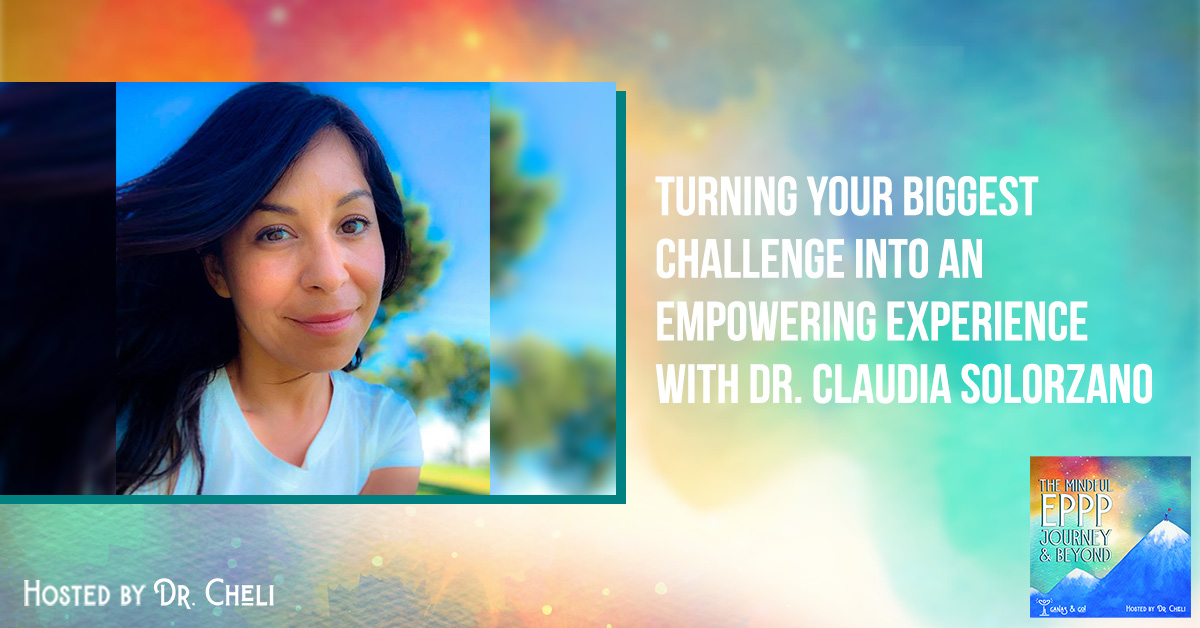
Becoming a licensed psychologist is a long, challenging journey—but what if the biggest hurdle, the EPPP, could be an empowering experience? In this episode, Dr. Claudia Solorzano, a holistic life coach and a license-eligible clinician with a doctorate in Clinical Psychology, joins host Dr. Cheli López to share how she transformed her approach to the exam, shifting from frustration to confidence. She reveals the study methods that worked, the mindset shift that changed everything, and how she now helps others tackle the licensing process with resilience. If you’ve ever felt stuck or discouraged, this conversation is for you. Let’s dive in!
Listen to the podcast here
Watch the episode here
Turning Your Biggest Challenge Into An Empowering Experience With Dr. Claudia Solorzano
In this episode, we have a very special guest. We have Dr. Claudia Solorzano, who is a Doctor in Clinical Psychology, a Holistic Life Coach and Intuitive. I'm very excited to have you here with us. A little bit about what the show is. This show is about exploring what it takes to become a licensed psychologist. This is where we talk about the ganas behind becoming a licensed psychologist. It's a very long journey.
After talking to a lot of people, there are a lot of different ways of getting licensed. I'm excited to have Dr. Claudia Solorzano here as she has a very interesting journey and I love it. Dr. Claudia will be discussing how she transformed her relationship with the EPPP from something that you wrote as a bully and transforming it into something that reminded you of who you are, your strengths, your beauty, your contribution to the world of psychology, and being empowered from that experience. I'm excited to share that with you all.
A quick thank you to our founding members. We have a lot of different people who have participated and are still participating in the Mindful EPPP journey, which we'll be talking about more toward the end. I want to focus on Dr. Claudia's history. First, if you could take a moment to introduce yourself, tell us a little bit about your education and training. Why did you decide to become a psychologist or pursue a psychology career? Anything related to your diversity using the addressing model as a framework, it's open-ended. Anything about your doctoral experience that led you to the here and now with the EPPP?
Thank you, Dr. Claudia, for sharing your story. I have to tell everybody that the way that we connected is that I posted in one of the Facebook groups for EPPP reform that I was starting this show. She said, “I want to share my story.” I was like, “Let's talk.” We chit-chatted through Facebook. I'm fascinated by the power of Facebook. Listening to a little bit about your background, what you've been through, and your journey, I was so inspired and motivated by you that I was like, “Can we please share how you got to this place?” Please, take it away.
Thank you so much, Dr. Cheli, for having me here, connecting on Facebook, and starting this beautiful platform for different doctors to be able to share what their journey is like as they're trying to crossover to becoming licensed. I have been seeing clients since 2006. It's been a wonderful journey. I began my Doctoral degree in 2009. Before that, I was a Master's level therapist and a marriage and family therapist.
The Journey To Becoming A Psychologist
I pursued becoming a therapist because I was so curious about what was going on inside of me. It was like I was looking for the missing piece of a puzzle. I remember that. I was like, “What are all these feelings and thoughts? Why am I so uncomfortable?” I always remembered feeling uncomfortable. I didn't understand why and I didn't have people in my life who were explaining to me much about what goes on inside of us. I only understood what I saw.
I used to spend quite a bit of time at libraries. I'm sure people thought it was a little different but while many were hanging out and having fun, I would find my way to a library. I remember that I would go through books that were and are still dear friends of mine. They were representations of hope and other people who I felt understood me and could explain things to me that I didn't quite know yet.
I decided to pursue an education in psychology, continue to build on my curiosity, and look for that missing piece, which I know is within myself. I found a lot of wonderful teachers and friends through books, universities, and different colleagues. I was able to find what I was looking for. I'll share more about that. That's been the journey.
In terms of the EPPP, I graduated in 2012. I had no idea that the EPPP would look the way it does now. I don't think that any professors ever stopped to share that it would be such a challenging journey to become licensed. It seemed like the next thing to do after you complete your hours. Once I began studying, which was many years ago, I discovered a lot of things about myself in the process, which was that I felt completely ill-equipped to take the exam. I didn't understand why because I had so much education behind me. I was a great clinician.
Struggles With The EPPP Exam
I began to ask myself, “What is going on with this exam? How do you feel good about becoming licensed? How do you feel good about the process?” Every time I would pick up this big binder of information, I felt like a total failure about it. I wasn't retaining the information. It seemed like I forgot a lot of the material but I knew that I knew what I was doing. It was quite challenging. Here I am a few years later, feeling good about not just the EPPP but about what happened to me as I was going along facing myself and taking a good look at what happens inside of us when we take on a big challenge and redefining what it means to me and about me.
You're located in California. You're getting licensed in California. You did start the process. Could you tell us a little bit about the logistics of what you've been doing? You graduated in 2012 and started immediately studying what kind of progress. A lot of people have questions about what program they should use. There are a lot of programs out there. Everybody passes with different programs. There are some, in my opinion, that are better than others. For you, what materials have you used? What have you found helpful? Tell us a little bit about that journey.
I graduated in 2012. Right away, about six months after graduating, I was already thinking about studying for the EPPP but ended up pregnant shortly after, so that happened. It changed everything in terms of right away when I was going to study. I waited for my baby girl to be about a year old and then began studying. At the time, I started with AATBS. I bought their material and looked at that but then I started with PsychPrep.
I worked with PsychPrep for a long time. At the time, they were doing live instruction so I paid for the package that would give you the live workshop and the weekend workshop for the strategies and test-taking so that when you were closer to testing, you would be prepared for that. I purchased the audio. They provided support in terms of questions that you may have as you studied along the way. You had to submit scores of what you were scoring in your practice tests and then they would eventually let you know based on the scores that you had whether you would be ready to take the EPPP or maybe push it out a little further and study longer.
Eventually, I became a master at memorization. I was memorizing a lot of the information but the comprehension was not happening as much as you're supposed to have with the EPPP because memorization is not enough. What I did is based on the recommendation of one of the doctors that I was working with at PsychPrep. She suggested that maybe it’s time to start with a whole new program. They're going to have completely different questions and that's what you need.
I started with PrepJet. I love the way they condense their information. I love the support. I love the conciseness of how they approach the material. I enjoy them. I like the coaching that they offer through Scott Ables twice a month, 30-minute sessions. That's all wonderful. I've enjoyed them quite a bit. I feel that they're very supportive. The support they provide is unique and very beneficial. That's been the journey.
If I understand correctly, you haven't taken the exam just yet, correct?
No. What I've done is something that I've learned. I've asked a lot of questions on the journey. I have learned that many people take the test multiple times. I remember talking to a couple of doctors who had taken the exam multiple times. They had said to me, “You know what? Try not to do that. Try not to take the exam so many times because it hurts you every time you don't pass. Try to prepare yourself as much as you can for the exam. If you don't feel ready, hold back until you feel ready.”
There's a little bit of a catch to that because you may never feel fully ready. That's something that I figured out as well. I've never taken the exam. I was going to take it, but COVID happened. It was a very stressful time for everyone, but it was especially stressful for parents who have small children at home, which I do. All of a sudden, our children were going to be on a virtual platform from home. I decided to hold off on putting additional pressure on myself and then take the exam once the children went back to school. I was able to have the time that I needed again to focus on very profound and dedicated study.
The Emotional Toll Of The EPPP
You make an excellent point about waiting until you're ready. As somebody who has taken the exam four times already, I completely agree with that injury that happens. We've talked about this in a different episode with different folks. It's a different type of grief that happens. It's almost a sense of disbelief like, “I can't believe this is happening.”
If you're somebody like me who tends to internalize things, then you make it mean a lot of things about you, your qualifications, and your quality as a clinician. You make a lot of stories. When you and I talked, the commonality we've reached is that I've done so much personal work on not making it mean anything. It doesn't mean anything if I pass or fail. Yes, there are some benefits when I pass. The other piece is not avoiding.
When something can bring up uncomfortable feelings for us, we subconsciously avoid it. That's something that we do. We don't intentionally do it. As a whole, we like to feel good. I haven't heard anybody ever say, “I feel good about studying and taking the EPPP.” I've yet to hear that.
I always see the face with the groan.
It shouldn't be the case but that's what it is. We don't intentionally wake up and say, “I'm going to avoid studying today.” It's almost like, “I'm going to study at 11:00 AM and finish studying at 3:00.” 4:00 comes by and you still haven't studied. You go through this whole process every day about why you're avoiding and why you're going in circles. I do think that there's a timing as well.
There are messages that we're receiving from the inside of us that say, “It's time for you to take on this challenge,” or, “Step back a little. There are a few things that you need to work on.” We all have that wisdom inside of us. We just have to learn how to listen. I wanted to be licensed a long time ago. I shared this with you. This is how we ended up connecting.
It felt like I was going to be a real psychologist, unfortunately. That's what it felt like. I was going to be the real deal. Before I was licensed, I was the half deal. It was not a full-blown experience. A lot of times, when I would interact with other doctors, I wondered if I was going to be perceived differently for not being fully licensed, even though I had the education, training, and excellent outcomes with my clients. You do experience those feelings.
Personal Loss And Its Impact On Licensure
Unfortunately, life happens in so many ways, and life happened to me. The person that I used to be with and shared life with for almost seventeen years died while I was studying. I had already started my journey of studying. I was already with PsychPrep going to my classes and he died. When he died, I was grieving, but I was also very traumatized by the sudden death that happened in him. I was all of a sudden a single mother, in my grief and with my PTSD from his death.
You cannot study while your entire person is trying to find balance and a way in life. I had to try to study and learn how to retain information, but my mind wasn't doing it. I ended up communicating with the board and explaining to them what my situation was. I had to request an extension, which I mentioned to you and they denied it, which I'm not happy about. I've made peace with it, but I couldn't get licensed because life had happened to me. What I can say is that I had to accept that life happened and that it was something out of my control.
I had to nurture myself, be loving to myself, and understand that it didn't mean anything about me. I had to reroute myself for a period of time because, ultimately, being well was very important so that I could be functional as a clinician and someone trying to get licensed. I ended up going through all that. That's why it got postponed as well. Timing is so important and listening to the inside of you that says, “It's time and you're ready enough.”You're ready enough to take on whatever's up ahead when it comes to this exam that seems so big for us.
Turning Challenges Into Empowerment: Being well was essential for me to function effectively as a clinician and pursue my licensure.
In California, we can practice as a psychological assistant. This is where we register with the board of psychology and they give us a max of six years to practice unlicensed under the supervision of a licensed psychologist. You had shared with me that you reached that point and you had a practice. What happened with that?
That was back in 2019. In early 2019, I was already communicating with the board of psychology. I was still very much in grief and I had PTSD that was diagnosed. I was seeing doctors, clinicians, acupuncturists, and a whole bit trying to get myself into a place of feeling more healed. I was in communication with them and that's when they said, “You can ask for an extension, providing supporting documentation, to show us that you do indeed have PTSD and that we can extend the time that you have to take your exam.”
Losing A Practice And Finding Strength
Unfortunately, when they denied it, I had to terminate the practice that I had built over many years. I still remember the day. July 22nd, 2019, was a very painful day for me. That was the last time that I could see clients under the capacity of a psychological assistant. I prepped my clients leading up to that day. Unfortunately, once I got the denial from the board that they would not extend my request. It was a very painful time for everyone. It was a painful time for my clients.
We had built a very strong relationship space in my office. It was another layer of grief, unfortunately. I had to grieve the loss of my practice and the closeness that I had with all my clients. I had to refer everybody out. That was a painful time and that was not the time I was going to study for the EPPP. If the board thought that that was going to help me study, that was not.
Unfortunately, it does not work that way.
It was trauma after trauma. That was traumatizing, too. I had to add that to the list of things that I had to heal. That did happen. I always look for a way. That's the person that I am. I find a way and here I am in 2021. We survived 2020 and grew. I feel that 2020 was a year of growth. It gave me the opportunity to deep dive inside of myself. I am thankful because when the board didn't accept the extension, it allowed me to go even deeper, take a look at myself, heal, and become stronger. Here I am doing this show with you.
You are the epitome of ganas. For those who don't know what ganas is, for me, the way that I define it goes back to standing and delivering. Ever James is like, “If you don't have the ganas, I will give it to you.” It's a teacher who was helping high school students pass the SAT. It's a sense of standardized test-taking. We know the research on standardized test-taking among ethnic minority groups. It's not letting that get in the way of us being able to do it. Many people are passing their retakes.
Transforming Mindset And Identity Beyond The Exam
I admire the ganas that you have, resilience, grit, and perseverance. “I have a goal and I'm not going to let anything stop me. Life can happen to me. Yet I can respond in a different way.” The key to this conversation is transforming your mindset. You've gone through a lot of trauma. You mentioned two situations that caused you a lot of grief and loss.
When I had to let go of a few of my patients, I had to terminate as I transitioned to giving the EPPP more time. It's either I work or study. At the time, I was underemployed. I was like, “Do I spend time looking for a job or do I spend time studying so that I can get a job?” There's this transformation that you have to do in your mindset to be able to get back up on the horse. I know for myself, I was very angry and resentful. Negativity was on this exam. It was traumatic, coupled with some academic PTSD from graduate school.
It came to a point where I had to tell myself, “Cheli, this isn't going to help you pass, so you have to transform it.” The way that I made that transformation was by creating the coaching Ganas & Go and redefining myself. I'm not defined by this exam. Ganas & Go was born and then The Mindful EPPP Journey. I was helping other people transform their mindset. For you, how did you do it? I know that I learned a lot about mindfulness and Brittany Brown's work. For you, what did you do? How did you get to this place where you are?
It’s similar to you, Dr. Cheli. I leaned into what I call a lot of my teachers. The ones I like, I adopt as relatives. For instance, I tell myself, “Louise is my grandmother. I'm going to listen to my grandmother. Brené Brown is my aunt.” I have elected a lot of family members who we've never met but we are on similar frequencies as I feel.
I love to deep dive. I use that term, but I like to go inside and take a good hard look at what I'm feeling. I remember that moment because right after July 22nd, I felt that I had learned something, which was, unfortunately, how many of us may feel this way, but being a psychologist was a part of my identity. I did not know that. I didn't intentionally have it become that, but I was the clinician.
All of a sudden, when July 22nd came, I was no longer. I was Dr. Claudia. I had the education, but I felt like the EPPP had punished me almost for not being able to do what I needed to do in the six years, which I know other people have encountered similar experiences like me. I remember that I felt like the board owned me and would decide my future.
I sat in my backyard and cried a lot. I said, “I still have the capacity and skills, but most of all, I have the desire to help people. I have the love to help people. Nobody can take that away from me, even the board.” I remember I had that moment where I was like, “I have to do something.” I believe in something bigger than myself, which I call God. I talked to God and said, “With everything that I have and learned, show me what is next for me because this board does not own me.”
The next thing you know, I decide I'm going to coach. Not only am I going to coach, but I'm also going to teach people how they can get to this place of feeling good inside of themselves despite whatever challenges are in front of them, including the EPPP. I talked to many different clients but it's very similar work, essentially, because we all go through very similar feelings. We're all human.
What I did was begin to map out the how-to. A lot of times, we have the knowledge but we have to do the application. I started applying, which means I'm going to feel my emotions and separate my identity from what I'm doing. I'm going to not define myself by the score of this practice test. I'm not going to beat myself up if I studied less today than my plan in my notebook. I'm not going to measure my worth by whether I am a licensed doctor, I am a coach, or I'm sitting on my bed doing nothing. I am still the same valuable woman with a lot of love, drive, and desire to give back to this world.
Little by little, I started separating my identity from what I was doing. Regardless of what was happening outside of me, I decided I was going to be the same Claudia, not even Dr. Claudia. I ripped off the title of doctor. I remember listening to this meditation, which I'll send to you. It's by Deepak Chopra. He said, “I want you to take off all your titles, even take off the title of woman. Take off your name. Take off mother or doctor. None of those things at this moment. Be the essence of who you are.”
I remember that when I took off that title of doctor. I have to be a mom, a future wife, and all these things. I felt so good, light, and free. Therefore, whether I attach myself to it or not, I was still that same person finding this peace, love, and excitement for whatever's up ahead, regardless of the outcome, my ups and downs, and the moments where I'll do well and other times where I'm just being human, not doing so great, and slacking off. That's fine, too.
I've given myself permission to know who I am at my core and that's what I teach others to do. Do not attach ourselves, our self-worth, and our identity to anything that we're doing because none of that changes who we are. On a very deep level, we are still the same very bright, beautiful essence that has something to give in this world that only each of us can give. I firmly believe that. It's a beautiful process. Once every single client that I work with is done doing the work, I see this light in them.
Do not attach your self-worth or identity to what you do, because none of it defines who you truly are.
All of a sudden, they're not carrying the heaviness of all of this guilt, shame, and all those self-definitions that they've applied to themselves. That's falling off and they experience this internal freedom. All of a sudden, whether it be the EPPP or anything else, it looks easy. It looks like another challenge or task, but it doesn't reflect anything about who they are, who I am, or who you are. I'm excited for when you get licensed. I already know that you are and I'm already declaring it. It's important, too, that we simply know and declare as we go along, knowing that what we desire will come to pass and trusting the journey to get there.
I had a very similar experience in that sense. I didn't know that I was so attached to my educational identity because I've been in school since forever. I also went to the library. I grew up in a low-income neighborhood. You could earn pizza from Pizza Hut if you register an amount like those summer reading programs. I went to the library and I remember my mom would go with me. We'd get our stamps so that we could get Pizza Hut. I forgot what else they were giving us.
I've been in school since preschool. I've always been one of the smart kids in the classroom. I always got the awards. I got into college, one of the top ones I wanted to go to. I got into the doctoral program on my first attempt. It was an easy “journey.” When we think about how we're acculturated in academia, especially in our doctoral journey, we’re like, “I'm a doctoral student. I'm a practicum student. I'm an intern. I'm a postdoc.” You're expected to be a licensed psychologist after that.
Detaching Identity From Titles And Achievements
You hit that roadblock and everything goes away. For me, I wasn't affiliated with an institution anymore. I would show up at community meetings, and everybody would introduce themselves with their name, title, and agency. I was always attached to something. This was the very first time that even though I was connected to an organization, I introduced myself as an independent participant. I had to learn to detach myself from those identities and recognize who I am that is not in relation to this academic training that I've received.
I'm a person. I'm loving. I'm a great friend. I'm a coach and a mentee, and also exploring. Let's go back to the drawing board. What am I good at? What are my transferable skills? It's a process that one goes through in the sense of learning to love yourself, practicing love and kindness towards yourself and others, and not letting yourself be defeated. I did go through that process. I'm wondering for you. Did you ever go through a process that you're like, “F this. I'm going to go with something else?”
I went through the F this. I go through that every day and that's okay. I can F this by midday if I want to and an hour later, I'm back on board. If I'm completely transparent, I went through the F this with the board. I said, “No. This isn't the end of the story here.” That's because anytime a door is closed for me, I look at it like, “That's okay because there's another thousand doors.” I have that mentality.

Turning Challenges Into Empowerment: Anytime a door closes, that’s okay—there are a thousand more waiting to open.
I appreciate you sharing your story about your childhood and how you've gone through your academic journey. There's something to be said about I'm Claudia Solorzano. I'm from Mexico. I wasn't even born here. There was that drive to make it happen so I could come back and say, “Family, I made it. I did it. I am a doctor. I am licensed.” I did all of these things and then I came back with tragedy with no license.
I'll add the sense of what came up for me. Your sacrifice was worth it.
I don't know how it was for you, but I'm the first in my family, immediate and extended, to ever decide to go to college. I'm the only doctor in my family. My siblings followed, which I'm very proud of. They're amazing. I have a social worker in the family, a teacher, a business owner, and an engineer, all of whom are in my immediate family. They're all wonderful. I felt the pressure of I'm going to prove and pave the way.
Embracing The Journey And Rerouting With Faith
When this all happened, I didn't say “F it” to everything. I said, “F it to the closed door. That closed door in front of me doesn't mean anything about me. I know by faith that there are 10, 20, 50, and 100 other doors waiting for me to knock on them and open them because there's something on the other side.” That is the attitude that I had. There was almost this anger, but this anger of I'm going to fight back. That's what we have to do in life. We have to fight back.
This isn't about proving to anybody. This is about discovering what are the truths of life. When one door closes, another one opens and another one opens. We are being rerouted sometimes for something better to happen in our lives. Had I not been rerouted, I would not be sitting here with you. Sharing what we're sharing. I am so thankful for the rerouting that happens over and over. I've learned that there are hidden gifts in it.
I have my moments where when I'm upset, I pace. I'm back and forth and then think, “What am I learning? What am I going to do next? How am I going to fight back?” I truly believe in fighting back with faith and vision. Here, I am helping other people. I’m totally excited about the process. When the EPPP comes and I decide to become friends with it and spend time with it, it's going to be all fine.
It's going to be la comadre since we talk about family.
I'll be like, “Here we go again. Let's go for another round.”
Embracing Rerouting And Pivoting
That's the beauty of it. If I'm being authentic myself, I'm almost grateful for the rerouting and pivoting. In business, we talk a lot about pivoting. COVID has taught a lot of us to pivot. You can't trust that it's going to remain the same. You have to be flexible. For me, that rerouting, pivoting, and closed door for those few times led me to discover my purpose.
My purpose is to help other people get licensed and navigate. One is finishing the Doctorate and then getting the license because the purpose has always been to reduce mental health disparities, especially among ethnic minorities, BIPOCs, and low-income. What if I could be the source of helping other people cross over? I wouldn't have dared to try and create a show or a live webinar on Facebook because that's not me. If people know me, I'm behind the scenes. I don't like to be on camera, but that is how I chose to respond to that adversity.
I don't know if you would believe it. Would you believe that I used to have social anxiety?
I wouldn't have believed it.
That was me before. Going through these things or these closed doors, I like to look at them where you're practically kicked out and ushered out of being able to see clients. Those are the gifts that allow us to truly face off with ourselves and come face-to-face, and it's okay to say, with our insecurities, beliefs that don't serve us, and these emotions that we've held for so many years that are blocking the flow of our creativity, health, and what we are meant to do in life.
This face-off that is constant I practice it every day. “I'm going to go inward and take a look to see how is Claudia doing. What does Claudia need?” I would not have done all of this, which my fiance thinks it's weird. He's like, “You're so weird. You're hanging out in the backyard doing who knows what and all these practices.” It's all fine. It's weird, but it's working. Who cares?
I wouldn't have done all that had it not been for these closed doors and what we see as adversity. They're gifts that we are given. Now that we know about this gift, then we decide, “I'm going to share it with someone else.” I want somebody else to know, “Don't feel so bad about yourself. In fact, don't feel bad at all.” This is just another challenge because when you pass the EPPP, I can 100% bet that there will be another challenge.
You're going to decide you want to buy a house, get pregnant, get married, or whatever it is, or you want to find love. All of a sudden, you're back to square one, feeling the same feelings. Once you do that deep work and you understand these principles, then you can do anything. Whatever feelings come up, you're going to tackle them the same. So much gratitude for the journey and for being able to share and talk with you. For anybody who is going to read this, there's hope and a way. It has nothing to do with who they are. It has everything to do with what life is about.
I love how you mentioned gratitude because that has also been my life lesson. Not that I’ve not ever been grateful. I understood gratitude on a surface level but I feel like I've gone all the way down to the core of being grateful to so many things that I had taken for granted and leaning into Oprah. She's even here on my bookshelf along with Brene, The Alchemist, and these folks who have been critical to my development. It’s that I get to.
What a privilege to be a first-gen Latina with a doctorate who gets the opportunity to become a psychologist so that I can help other people heal. We're healers. I see myself in that way as I'm an artist, creative, healer, and all these different ways and giving gratitude. Interestingly enough, I've revamped my studying efforts.
I was talking to a friend and suddenly, I realized that I have all these “problems” in my life, like my relationship with this person, my work doing this, and all these different things. He's like, “Those problems were there yesterday. Why are they a big deal now?” I was like, “Good point. Let me pause and explore.” What I found at the root of that was fear. It was like, “There it is again. What if I fail again? What I'm realizing is that there's no one way to study for this exam. There's no formula to pass. There are so many variables.” He's like, “That's easy. We go back to gratitude.” I was like, “That's right, gratitude.” I have everything that I need.
Gratitude is like medicine. It's a very high-frequency emotion. The more we feel it, the more we feel good and we are in appreciation of even the little things. It’s the gratitude for the little things like, “I can see. I am alive,” especially with what COVID has been for all of us. In response to this one thing that you mentioned, what if I fail again?
Gratitude is a powerful, high-frequency emotion. The more we embrace it, the better we feel, allowing us to appreciate even the little things in life.
One of the things that I teach my clients is that the word fail on a frequency level is very heavy and has a very low frequency, which means it doesn't make us feel good. When you use the word fail, I haven't heard one person that says, “ I'm so excited about failing.” It's a lot of discipline to say that. There are people out there who will say, “Great, another failure.” For the most part, when we hear fail, we feel bad.
Reframing Failure And Trusting The Journey
I like to replace the word fail with fall, which is, “I fell down again. It's okay. I'm going to get back up.” Since we were babies, we fell down and got back up. There's no shame with a one-year-old when they fall down twenty times. For some reason, we're afraid of falling down. I don't want to say failure. We're always expecting ourselves to be standing firm and successful.
What I would say is if you take the exam again and fall down again, you get back up. In that process, you're going to learn something again. It's not about passing or failing because you are going to pass. We already know that you're going to pass. It's about the journey to get there and fully accepting and embracing the journey, whatever that journey looks like for each of us.
When we do that, there is no resistance, fear, and pain because all of a sudden, we're saying, “Whatever I'm feeling, it's okay. It's okay that I'm feeling it and it's okay if I'm uncomfortable. It's okay if I go and have fun with this exam and I still don't pass. It's okay if I do pass because I'm going to do something else after.” All of it is okay. When we can get to that place, it's good. You're going to be excited to go in and take it. It's going to be another experience that you will one day use to share with other people.
In business, failure is a good word because they say fail fast so that you can pivot quickly. Failure means learning. Brené Brown talks about daring greatly. You put yourself out there and stood out there in the arena. Even if you fall, you can still rise in it. This has been great. I'm wondering if you could also speak about what has been your overall experience. You've talked about it in different ways and some of the adverse impacts. It's the CBT model, how our thoughts are connected to our emotions, actions, and physical sensations. The lotus flower is in the middle, which represents the mindfulness piece about it. What comes up for you in this space?
I used to practice CBT quite a bit. There's a connection between thought, emotion, and then action. What comes up for me is not just our thoughts but the beliefs that make up our internal thought life. We can use those to help us move forward. In that moving forward, we're going to feel good. In that feeling good, we're going to be in the present moment and do things in a way where we're supporting our growth rather than sabotaging it or being afraid of it or completely living in our pain.
I always think of the fact that we can do an Airbnb in the pain but don't stay there. Don't buy a property there. Do the quick visits. What comes up for me is that we're going to have an opportunity to fine-tune what happens in our mind, pay attention to how our emotions respond as well, and then find a better, wholesome, loving, and health-filled way. All of that will help us our entire life. That's how I see not the EPPP journey especially but every journey right after that. We're never going to be done. That's what comes up for me as you share that.
We will have opportunities to fine-tune our thoughts, observe our emotional responses, and choose a healthier, more loving, and fulfilling path. These practices will benefit us throughout our lives.
Is there anything else that you'd like to share with us? What's next for you? Where can people find you?
The last thing I want to share is never give up. I like that you use the word ganas. Translating that, it would be desire.
The grit.
I feel that it's so important. As cliche as it sounds and as many times we've heard this, never give up on that soul dream or desire that is present with you when you wake up and go to sleep. Never give up on it, whatever it is. No matter what the challenges are and how many times doors close, continue to stay the course, and you will turn the corner. You will see these soul desires come to pass. I always remind people of that.
Sometimes, we need that reminder, “I believe in you enough. Even when you're not believing in yourself, I'm still going to hold space to believe in you.” You're going to turn the corner. All you have to do is keep believing. That applies. I always like to remind people of that. For me, I'm going to continue growing my coaching business. It's growing already, so I don't know what to do with my time. Sometimes, I overbook myself and then I'm like, “I need ten assistants.” That's where I am in my life. I'm like, “Oh no, I got too busy for myself.” That's part of the vision.
People can find more information about me on LinkedIn. They have my email. I'm expanding my social network platform. That's a challenge because I'm not too tech-savvy, but I'm going to hire someone to help me with that. I'm going to continue to grow and listen to the soul call and provide all my support, love, and faith to every single person that I cross paths with. That's what I'll be doing.
Thank you so much for sharing your insights with us. I'll share a little bit about the Mindful EPPP journey and then we'll come back to you. The Mindful EPPP journey is what came out of what I shared. When I saw this image of the mountains, this was part of the logo for the Mindful EPPP journey. It's three mountains. The first one was graduating college. I didn't think I would do that, and then the Doctorate, which I didn't think I would ever finish my Doctorate degree.
When you think you made it, there's another mountain. When people pass the EPPP, there's always another mountain, whatever that may look like for people. I love that image because it's the person at the very top who reached it. It's the sense of not giving up. This is a community where we can share mindfulness, share the journey, and be where we are.
I do have an accountability group membership that I launched and we have some members. They're amazing people. If anybody is interested in joining that, you can feel free to reach out. We meet on Saturdays, 11:00 to 2:00 Pacific Standard Time, with a bonus day on Wednesdays, 3:30 to 6:30 Pacific Standard Time. The way that I describe the EPPP is that we're Olympians of the mind.
I was thinking about the Olympics when I was trying to finish the dissertation that I didn't think was ever going to be possible. I remember the Olympics were on at the time. I forgot what year that was. I was like, “These folks are grinding and training day after day for a minute of a competition.” I was blown away. I was like, “That's like us defending all these years for a two-hour time block to defend the dissertation.”
I thought about what would the EPPP be equivalent to in terms of Olympic sports. I was like, “What seems so ridiculous? How the heck do you even do that? Pole vaulting. People do it.” All we have to do is reach a 500 score. That's all you need. If you get a 501, nobody cares because you still get the little piece of paper. The EPPP Journey is a community of support. If anybody's interested in reaching out, you can go to MindfulEPPPJourney.com. I'm also on social media such as @GanasAndGo and @MindfulEPPPJourney, Facebook, Instagram, and Clubhouse. I don't know if anybody's out there on Clubhouse but please add me. I'd love to participate.
Keep trying, keep going. Don't let go of that dream or goal that you have. I spoke to somebody who was telling me about her journey and how she didn't pass and then passed within six weeks. She told me that her mother told her, “You can't drown before getting to the shore.” It's powerful. Keep swimming, keep going. Any other last words that you'd like to say?
Thank you. I’m truly grateful for this time. It’s almost an hour of talking and sharing. It's beautiful to hear about your journey as well and be able to talk about this EPPP, not with pain and sadness but with hope and reframing. We're doing a lot of reframing. It's a home-based approach to what seems to be such a painful experience and transforming it. I believe that in the near future, I hope to talk to doctors who are en route to getting licenses and hearing that we created change.
It is no longer so painful because eventually, they figured out, “I heard that it doesn't have to be this painful.” I’m so thankful for this because it's paving the way for a lot of clinicians who are going to initially maybe be afraid, but then they're going to hear about all this wonderful reframing and say, “There’s nothing to be afraid of. Everything's going to be fine. Echale ganas.” Thank you.
Thank you, Dr. Claudia, for your time. I know you're so busy so I appreciate it. Hopefully, our audience will be inspired by your story as well.
Thank you so much. Thank you for having me. Take care.