- Jan 1, 2025
“Pasas O Pasas” (You Pass Or You Pass): Relying On Our Ancestors, Faith, And Academic Families In Pursuit Of Our Why With Dr. Melissa E. Muñoz
- Dr. Cheli López
- Podcast
- 0 comments
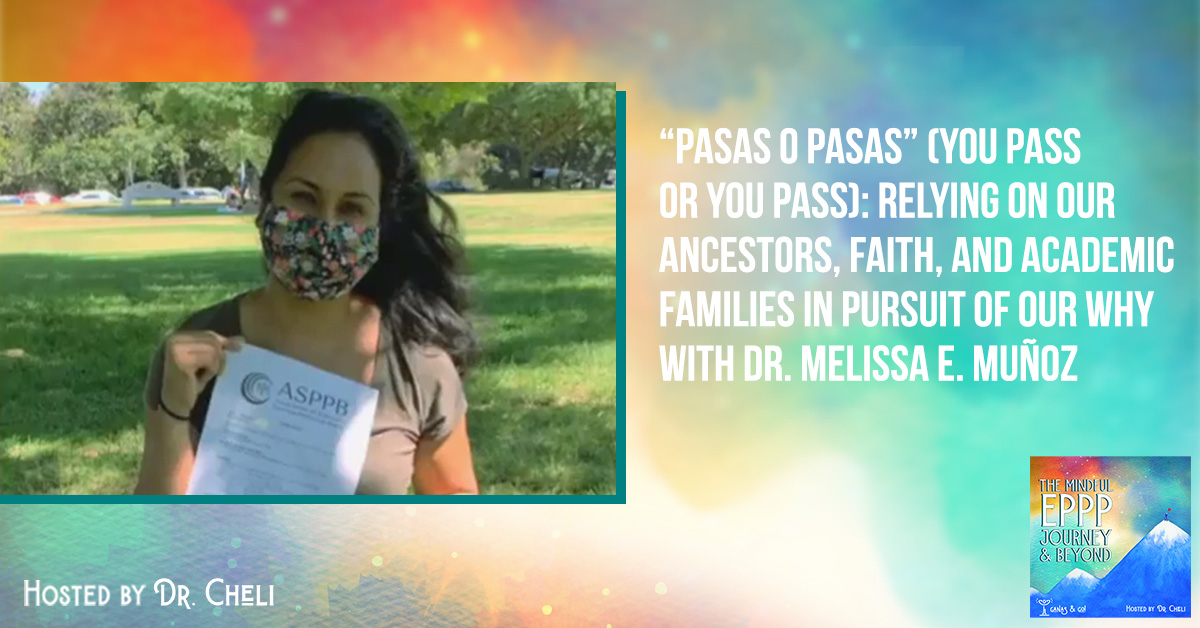
Passing licensure exams is one of the most nerve-wracking challenges a student needs to conquer. However, life doesn’t always go according to plan. Licensed Psychologist Dr. Melissa E. Muñoz has had her share of life’s trials. She sits with Dr. Cheli Lopez to discuss how she got back on track after failing the exams on her first try. She joins us today to talk about how she went through graduate school as a person of color and how she managed to navigate the system with the help of her academic family. Listen in as Dr. Melissa shares distress tolerance strategies and the things you need to improve on to equip you with the knowledge you need in getting your psychologist license.
Listen to the podcast here
Watch the episode here
“Pasas O Pasas” (You Pass Or You Pass): Relying On Our Ancestors, Faith, And Academic Families In Pursuit Of Our Why With Dr. Melissa E. Muñoz
Welcome to the launch of The Mindful EPPP Journey and Beyond Podcast. We are exploring the ganas behind becoming a licensed psychologist. The process is demystified for those of us in the field, especially as first-generation. The ganas, for those that don't know, is a combination of things like you are in grit, resilience and persistence. You have a goal and it does not matter what happens. For Latinos or particularly for Mexicans, it's Echale ganas or keep going and don't give up. We are exploring what it takes to become a licensed psychologist. I'm your host, Dr. Cheli or professionally known as Dr. Araceli Lopez-Arenas.
My name is Dr. Melissa Muñoz. You can call me Dr. Meli as well.
I would like to give a shout-out to some of the founding members of the Mindful EPPP Journey. I developed an accountability group to help us pass the exam. I would like to thank Dr. Patricia Celaya, Dr. Melissa Muñoz, Dr. Veronica Mercado and Dr. May Bayani. This has been a journey. This has been a work in progress for a few years.
They were the folks that helped me brainstorm. I had an idea and I was like, “What about if we did this? What if we did that? Can we test this out with you? Would you mind if I tried it out?” Dr. Muñoz has been gracious in giving me her input and letting me test things out. First and foremost, I would not be here had it not been for you and many other people in my life who I have had several conversations with. I'm truly honored to have you in my life and to help me with this mission. My mission is to help first-generation psychologists and to be psychologists get licensed and become licensed psychologists.
I am super excited to have Dr. Melissa Muñoz, a newly licensed psychologist. I'm so excited to have you with us. Thank you for being my first official guest. We would love to hear all about you in terms of your education and training, where you are from, why you decided to become a psychologist, diversity and doctoral experience. Tell us about you. Welcome.
The person behind the camera. I normally don't do social media stuff like this at all, but it also echoes you. It's so incredibly important to have other people know our story. It's the power of a story and what that holds. From a therapeutic point of view, it can be normalizing to go into and instill hope or at least give something when you feel like you got nothing. That's an important part of why I'm here. It’s to be able to say, “I don't know how the fuck I'm here.”
Being licensed and the fact that I'm even saying I'm a licensed psychologist is beyond words. It’s eight years in the making. If you include undergrad, thirteen years in the making. It's a lot. There is a lot at that moment when I go and I say that. We know the story, history and different things that come along with when you say a licensed clinical psychologist.
I started off with that, but to rewind a little bit to know who I am and what parts of my journey go, people always go and I asked some of my students, “What's your why? Why are you doing what you do? What's your why and holding onto your why and where you come from?” I'm a third-generation Mexican-American, straight out of Southern California.
If you think about SoCal, it's one of the most diverse places in the United States, even in the world. There's this plethora of diversity and knowing people are different inherently. We are in such a liberal place. For me, being third-generation growing up, my dad had always gone and told me, “You are both Mexican and American. You are both.” Sometimes with some of those dual identities, you are always going and you are waxing and you are weaving, and putting them together.
Thinking about where I'm at now, part of the reason that growing up in the US being 1 of 5 children from my mom. I'm number 4 in the lineup. Even though being number 4, I'm one of the first people to go to college, in general. Both of my parents did not graduate even high school. At that time, there were other things that were going on in their lives. He ended up going and having to take care of his brothers and sisters. He was 1 of 11. He ended up being in the military and all having to take care of folks. Also, my mom, being a teenage mom. Sometimes education is not the most important thing, but how do we go and put food on the table.
Oftentimes, I feel like what I learned a lot from my parents is echale ganas or how do you go and how do you have that grit and that inner spirit to go and keep working day in and day out, even if it's not necessarily here, but even if it's just with your hands. I feel like I went from a young age. I'm both Mexican and American and also having a lot of privileged identities, developmentally able-bodied, and being raised Catholic comes into play a little bit in my story. Being raised a Catholic, I feel more of a spiritual connection to folks. We were middle-class growing up. I was fortunate to have access to books and different things.
With the lower SES mentality, whatever that means, I know growing up that's part of that hustle mentality. I need to go and find different resources or different ways to go and use something. If I don't know something, I got to go and I would ask somebody, and then the same thing with national. Growing up in the United States and being female, a lot of different things go and come into play with who I am growing up.
When we think about stereotypical Latina, what does that mean anyway? Those are some of my things, to go back to the roots and what's my why and why am I doing what I'm doing. Inherently, I feel like I'm a caretaker. I love going and helping people grow and seeing the light in their eyes when they go and they get a concept, do something or make a change.
Sometimes they say, “You have to think like all the people who have come before you to get into that a-ha moment.” My why was, growing up, I had always wanted to be a super mom. I don't know how else to say that. When I say super mom, moms know everything. Moms look at you and it's like, "I know where you are going and why you are doing what you are doing,” but we know learned behaviors, patterns and things. I thought that was the coolest thing and add that with care and compassion. The stereotypical you go and you got into undergrad.
It’s hard to focus and concentrate when the world feels like it's on fire.
I’m one of the first people in my family to go to college in general, not knowing the places to go and the places to navigate like, “What is financial aid? I think I know this.” If I don't know, I'm going to ask my friend where they are going and what they are doing.” You’re going and trying to figure out this whole system for a place that I realize, starting an undergrad that was not made for you. Sometimes it's about understanding structures and systems, especially if you don't have parents that can give you advice in that way. You are trying to do the best that you can. I was fortunate to find academic families. I was mentored by Dr. Jeanett Castellanos who is in higher ed.
We both went to UCI.
This concept is known as academic families, you are trying to navigate systems. It’s like your homies or your friends who you can go and ask questions to or model after and things. Little did we know, that's what goes and gets you by later. The only way to make an impact is to go and to be somebody, especially given being who you are. You are Latina. A lot of people might go and see you and think X, Y or Z, but in order to have that credibility that nobody will be able to take away from you, you have to get your PhD. I'm like, “I'm going to get my PhD.”
I knew that. I will talk very briefly with the graduate school about what that meant. I had grown up in Orange County. I commuted back and forth to UCI and did not realize that the people who made me, my family and my different support systems were an important part of my success. I did not realize that until I moved away. She said, “We are free to go. Nobody should have to pay for their degree. I sent you to the Midwest to go and to have your degree paid for. The overall thought is to have you come back and to teach the communities that you were meant to serve.”
Especially being a person of color, I realized throughout graduate school, here I am in California, made the three-day trip out to Columbia, Missouri, which is a small little town to get my Degree in Counseling Psych. Even when I'm there, people from Missouri were like, “What are you doing here? Were you in Michigan or Montana?” “No, I'm in Missouri.”
If I could interject a little bit, that's exactly what I call parallel migration. For example, I cross borders and went to Texas to go to graduate school. I remember at a low point being homesick. I called my mom and I was telling her how I felt. She's like, “I totally get what you are talking about. That's exactly how I felt when I moved to the US.”
It's a total paradigm shift. That's the parallel migration. Our immigrant families cross borders into the US for better opportunities for themselves and their children. Their descendants, we’re doing the same by going in crossing state borders, leaving our families behind and not knowing anybody wherever it is that we are going like Missouri.
It's framed to you as the promised land. This place where you are going to go and get a good career. You do it for yourself and the career, but you got a whole people behind you. You got family and friends who are all looking up to you being like, “You are going to do it." You are like, "I'm going to go and do it." You get to the promised land supposedly and you are like, "What is this? This is different." It's the Midwest. It's a predominantly White population. Here comes this Latina in the middle of the Midwest where it's not even just the race and ethnicity here. It's the cultural part of hustle and bustle of California. You go to the Midwest and there are two ways. One way in, one way out. I should say two ways on the highway, but you go up to LA, and there are eight lanes. You are like, “Where the hell am I?” You don't know.
It was a total culture shock on so many different levels in terms of being at a predominantly White institution. Even though there were other Latinos in my program, I was the only Californian. I have run the difference that not all Latinos that look like you and talk like you are like you. There's a different mentality from California, whether you crossed the border or the border crossed you, the generational things.
It was a culture shock for me in terms of being in a predominantly White space, where having grown up in San Diego, California, everybody here is Brown and speaks Spanish for the majority if you got closer to the border. What I was not prepared for were the intergroup differences. That had its own impact as well. I was not prepared. I did not know what I was getting myself into. Being first-gen, you don't know.
You are like, “Okay. Great.” Even talking to some students there too, in retrospect, I understand why but even they were helping bridge us from whether there were other Latino students, folks or students of color, but they are busy. As you go throughout the programs, you have got so many different things that you have to complete.
It's like do or die, but I remember going and being there, what was hard was that first semester because everything is new. I like to tell my folks, “When you are going to grad school, it's almost like a video game. You have to level up.” First of all, you are trying to adapt to a new place like, “Where do I get groceries? I need the essentials. Do I get a couch? Where do I get the important things or my hair and nails done?” Get set. That’s it.
You then go and you’re at some of these cultural pieces that for me were almost like learning to do this cultural dance that I had not known how to do before. I knew how to do it at UCI because I had those supports. Now, I have to learn to do this dance in the Midwest, in the middle of Missouri where now I'm like, “How do I go and navigate things?”
I was brought to a university on scholarship or fellowship. The people from California which is oftentimes where we came from or other diverse places, “Let's bring them in the Midwest and we will pay you a little bit extra to go in and do this.” I remember thinking throughout the whole journey when we would have these moments that we were like, "This is how I earned my money."

Passing Exams: Half the battle is just about showing up, getting yourself to start studying, sitting down, and just doing it.
One example I would like to talk about is one of my first-year classes. I don't remember if it was Counseling Methods or what it was, but I remember there were two people of color in this class. It was me and Kathy. She was a Black woman who was somewhere from the East Coast. I remember differences in folks of color and that inner group stuff.
There were also maybe a couple of international students but they were from Taiwan. Not even knowing some of the differences because they had not been here as long and were able to get some of those nuances. I remember once the instructor had gone ahead and asked me as a student of color in a class of twenty, “What are some of your examples of being a student of color in a predominantly White institution?” I remember being asked that not directly, but it was more like in general, but I'm going to look at you and you learn the code, the Black code between myself and Kathy. I was like, “You are going to take this one. I’m going to take this on one.”
Some of those processing things at the moment, taking more emotional energy to think about how do I respond to this to one where I feel safe and true to myself at the same time. I feel in some instances like it was training. Oftentimes that dance, I would have to do that a lot. If we were talking in the context of one of my practicum, I was working with one of the students or a client I was working with whose child was also being evaluated at the center. I also practiced a clinical practicum at the time. I have had a practicum where I had one supervisor and she went, “You and your people,” and then she goes, “My people?” She's like, “Your assessment center people, not your people.” Oftentimes those weird flubs. I had one client in particular say, “Don't worry. I won't call immigration on you.”
I'm curious how these experiences contributed to your licensing process. When you are at grad school, did you know that this process was coming up? Was it in the distance? Did you know or knew what you needed to do when you got through that time period?
In my program in particular in grad school, we were bred to be researchers. I had no idea what it meant to do the licensing part, even when you can get out. Eventually, the way the story ended up going was that you are always consistently going in questioning and fighting. Is it me and the imposter syndrome? What will I be in all of this?
It matched the Sharp Healthcare. I work in the VA San Diego Healthcare System. Doing that, fortunately, there were some people who had gone and who had told us, I was lucky because I was resourced. A lot of friends I have who were trying to get licensed in California had no idea how you even get licensed.
What do you mean by resource?
It’s to have a training program that walks you through like, “This is the system.” I had done my postdoc at the VA. “These are things that you should expect, timelines and different things.” I had an idea of what the licensure process looked like logistically. Even sometimes folks have been like, “If you need materials, let me know and we will figure it out.”
Those are some of those hand me downs types of things. That was because I got lucky to be resourced in a good post-doc. Other people have no idea what this process looked like. They are like, “How do I get licensed?” That question on, “Who do I go? Who do I talk to? How to figure out how to go and how to get licensed with all of this?” It was challenging.
That's a relevant point because I think I fall under that category. Because of my doctoral experience, my dissertation got derailed for about two years. That took me off the track of getting a formal post-doc. I had to piecemeal my post-doc training, which I did part of it at the same hospital as you at Sharp. You are piecemealing, “Where do I go? The California Board of Psychology website.”
Even when you get there, it's how do you navigate it because it's written in code. No offense to those who wrote the page. For somebody that’s a novice, you don't have that support and it's very confusing, that's why you rely on social capital for the people that do know and you come together. That's a distinction between a formal internship and a formal post-doc and a non-formal post-doc where the benefit for those that are considering, “Do I do a formal post-doc or not?” I have heard those questions in some threads. The benefit is that you do get some of these resources like you mentioned.
You are going and talking. You are talking to a friend, “What do I even do?” Even when you are well-informed, you don't know the exact thing that you are looking for, if that makes sense. You are trying to google it. Even some of the interfaces can be challenging sometimes too. It's hard to try to even figure that part out, to know, “When I'm becoming licensed, what's the first thing I submit? Did I submit all of the right things?”
I picked up your social media. It says, “Congrats, Dr. Muñoz for passing your EPPP exam.” You are holding up your single sheet of paper that says that you passed. In your social media post, in which you let me borrow the pictures, you have the picture of Our Lady of Guadalupe. Tell us a little bit about your journey. Are you a first-time passer or a multiple test taker? Walk us through your journey for somebody reading that started or has been in it for a while. Share a little bit with us about what that journey has been for you.
Post-doc started in September. I wanted to go and I was like, “You got some time. Start submitting materials to the board and whatnot.” When the New Year starts, I was like, “New Year starts new you.” I was fortunate to have some peers that were like, “What do I do? How do I do this?” They are like, “What I did to pass the EPPP was I listened to Sharon.” The PsychPrep Sharon Jablon. Listening to those is helpful. I did a couple of practice tests and it was done.
Sometimes people need a little bit of extrinsic motivation to get back on track.
That's what we were told. “This is how I pass. You listen to the PsychPrep audio with Dr. Jablon and you take practice tests.”
That's the mentality that I had. I'm like, “How much do I study?” They said, “The main thing is around 100 hours or so. I had a couple of friends who had passed it even before.” Keep in mind that you go and you start. That's how I had started. I like to go on runs in the morning. I would listen to Sharon. I know all of those things. All the little different quirks like funny things that she would go and say like, "If there was a hippo on UCare, I bet you would remember that.”
All these small things. I'm going and I'm reading. I start taking the test. The first test that I had gone in and had taken through was the PsychPrep teaser. The old-school ones. I had gotten 48 and I'm like, “This is pretty decent. That's fine.” Let’s go and keep reviewing. That had been maybe a couple of weeks in as a baseline. I had been told. Around this time, I feel like I'm floating a little bit. What I'm going to do then is I'm going to go and I need people to study with. Dr. Cheli had gone and said, “I'm looking for people to go on a study.” I'm like, “We are going to get this done. Give me the most efficient way to pass this damn test.”
You and Kathy at the time too, we are all studying together. This is pre-COVID. That's a whole other important part to mention here in the context that we are in. It was that we would meet twice a week. It would be about getting yourself to start studying, sitting down and doing it. That's half the battle.
That’s how it was, just to show up. At the end of the day, you are tired because full-time post-doc. You are putting in 40 hours a week and then it's like, “We need to add on another 10 to 20 hours just to start for 3 to 4 months.” You are tired. It's like, “Tired body. Let's go and show up even if you learn a concept or two. Small concepts, that's it. Just show up.” Even at that first one, both of you were in the studying round and you were doing cool things. I realize in hindsight that's pretty helpful.
For me, I reached a saturation point or I hit a wall. Nothing else was sticking and I was like, “I had to change it up because I have read this five times and I don't remember what I read.” That's when I started doing the visual study guides.
I remember Adam. I don't think at that point I had even taken any. I maybe took one practice test. I'm like, “That's cool,” but you feel like a fish out of water. You are like, “Where do I even start? Where do I go in?” You are absorbing everything and you are frozen because you don't know what to do, and you are like, “I can start working through Industrial-Organizational Psychology.” You don't know what to do.
You both say, “What's the first thing that you should go and do? Try PrepJet because I'm thinking to myself, “I need to be one and done. I can't spend my life doing this test.” As a caveat, I have gone had taken or did PrepJet for 3 or 4 months. I’m thinking after three months I will be good. Three months fell into six months. That’s the time that I had gotten on.
Why did it double in time for you?
Let's look at the pandemic. It was supposed to take it the end of March 2020. I don't remember whether my test got canceled or not. I moved it to early-April or something like that. I pushed it back, but what happens is at the end of March, early-April, they shut down the centers. It's almost like you are going and you are trying to study for something, but you don't even know if you are going to take it or not. That was the biggest thing.
I was like, “Why am I going to go and put all this effort in? Here we are quarantined.” Nobody knew what was going on. There's this virus. I live alone. I'm spiraling out of control. I had been dating somebody at the point who was not very helpful or supportive. I'm freaking out. One, am I going to be infected? Two, I have this test to study for. It was a dual purpose where I was studying for it and it was a nice distraction from time to time from the chaotic world that we know. At the same time, I became so engulfed with it. It was an abusive relationship. It really is for me because it gives me purpose and something to do during quarantine.
At the same time, I became consumed with it because all I was doing was studying for this test and did not do anything else. I was not consistent. I had been pre-COVID where we were going, sitting, studying and doing some of those behavioral activation things. At the same time, before versus when the pandemic hit, it was consistent but mentally, it was hard to focus and concentrate when the world feels like it was on fire.
When I rescheduled it the first time, I was supposed to be ramping up, but at the same time, it's like, “Why the hell am I going to ramp up if I don't even know if I'm going to even take this test or not?” I would slack off and then I would feel guilty. It was like doing your dissertation that I would feel guilty about. I don't think it helped at least at that point in time to reschedule it and it was free. That goes into procrastination and things like that. I would like to go and I must have rescheduled this stuff eight times.
Why is that? Was it because they kept rescheduling because they were shutting down and then opening up?
It was more me and I was like, “I'm not ready. I'm going to push it back.” The way that I operate, sometimes we need a deadline. At the time, and this is what's weird now, I did not know if I was going to get an interview for the job that I have now. I’m thinking at that point, "What's the point in getting licensed?" At that point, I had also thought that they had closed the positions already. You heard through the grapevine that they had already picked who they wanted. I'm like, "Why even bother? What am I going to do? I'm studying for nothing."
I knew it was for something and it should have been for me. Sometimes we need a little bit of that extrinsic motivation to be like, "I go and I need this." It had been a big part of why I tried to hustle again at the beginning. COVID hits. I hear that they pick people and I slack off a lot. Had it not been for the slack off, I still have been meeting again with folks in the EPPP journey. That had nothing to do with the group or anything. It was me. I'm trying to cope with the outside world, but what had helped me get going because I was not necessarily studying outside of the group like I should have been doing and being consistent with it.

Passing Exams: Licensure tests are expensive, and most of the time, people aren't financially resourced that much.
Some days I was good and sometimes I was not. The days that I was good, engulfed and invested, everything. I was going and writing on my windows all the different nervous systems or whatever. I was going and I had my cards here that I was going, doing and I was super engaged. You got stats and I color-coded them. I knew that's fun sometimes too. I'm like, “I like colors. Let's do the purple ones.”
Tell me how you brought fun into this process. How did you bring some joy? It can be a pretty bad process for some people.
It came down to small things. I'm like, “This is an investment. That's what I wanted. I might as well as go and put different colored things.” I ended up getting a bunch of cool little cute pens to go and add more colors to it. Even coming in as I'm learning, what I did for my new cards, I was using PrepJet as my primary one. I remember I would write certain things, but then I would link them to funny little things that were happening in my life.
For example, I remember that there was somebody who was angry. Keep in mind too that life happens. Pandemic happens, quarantine, can't leave and no socialization. I was dating someone at the time who was not a good fit. We were arguing back and forth. I remember going in thinking, “One of these was aggression,” or something like that. I remember going and writing aggression. I was like, “This person here and there. He can't do this.” You apply it to your life. That's how I remembered it. Even if the person had parents who were divorced and I was like, “That's what happens when you do and get divorced.” We had even gone and made little mnemonics when we were in session for EPPP journey that made it stick, and we will remember it.
There are things that I go and that I even remember now. They go and they put a check on my face. We did it together with one another. Going into the meeting, it was not even just about the content. Sometimes it was where we were all at. Sometimes we were invested in. Sometimes because of life, we went back, but it was going and consistently meeting and knowing that you had an academic family to go to and hold on with one another.
I'm a first-time test taker. I had kept pushing it back maybe at that point, 2 or 3 times or something. I took it at the end of May. That's what it ended up coming up and I did it. I'm like, "You have to rip off the band-aid." There’s a lot of back and forth, left and right. I kept pushing it back. It was the Mujeres that were in the group that were like, “You have to take it.” You get in those thoughts and I’m like, “I can't do it. It's too scary. I don't know if I'm going to make it.”
You hype yourself up so much to this like, "What if I don't pass it then and this is it? It was expensive. What if I don't fucking pass it and then I have to go and pay $685.50?" That's how much it is. People had to save up for that test. They are $5 more now. How I had saved up? I had to do my tax return. That's how it was. Whereas some of my peers who were married were able to save up for things or they had a partner who had a nice job that paid pretty well. Here I am. I went to a tax lady and I was like, "I'm trying to become a psychologist."
She was a woman of color too. It was funny. We had this thing. I was like, "We got to get this money." She's like, "What do we get here?" She was asking me all the questions to look through things. She's like, “Is this enough?” I go, “Yes, it is,” because I could not even take the test. That's the thing because you need to set the date to focus, but I could not even sign up for a while because I did not even have the money to go and sign up to have the test.
That was part of my thing too on why I had procrastinated and not having taken that series because it was a financial thing. I'm paying for some of the study materials when I did decide to invest in PrepJet. That was expensive too. Even though I was at a formal post-doc, we don't get much. People pay enough. Taxes take it all away because you are in California. I have things in general that pop up and I'm like, "I'm told at first you are supposed to pay $1,300 for the whole process." No. That's only the bare minimum if you take the test and the licensing fees. That's not including the prep materials, if you have to take the test again, or having to mail things to make sure everything codes and things.
Sometimes people are not resourced that much. It's a lot financially. Here I am going at the end of May. I'm like, "Bite the bullet." Right as I was about to take it, the person who I was dating at the time decided to ghost me. There was a lot of that emotional part too. Keep in mind that's when stuff was starting to charge up with the racial pandemic too.
There were things that were brewing. It's like, “Take this test and get it over with.” I had everybody going and telling me, “You are going to pass. No way you are not going to pass. You are so dedicated.” They had gotten to the point when I was going to take it, I was engulfed in it. I was waking up every morning listening to Sharon. On my runs, I’m listening to Sharon. I was here. I was reading, focusing and doing the cards and I was in it. I'm doing it.
I go and I take it. It's this marathon. I'm tired. The night before, I get all of the things. I did not sleep as well. I had people going and basically telling me and I was not listening to Dr. Cheli when she said, “You need to sleep the night before.” Without knowing, I'm up and I'm trying to review things. I don't listen to my body. I go and do the test. Four hours and I remember being there and panicking. I remember part of my process had been like, “I had something that I don't remember what it was.” Sixty minutes left and I had 75 questions. I remember I got to hurry up.
We have a minute per question. You had less than a minute per question in your time remaining.
The universe is telling you to start doing things that are meaningful.
You psych yourself up. Your distress tolerance strategy, you try to go and do it. At the same time, you have all these people that you have told already that you are taking the test. I have even people praying at the church for me. Everybody is going and everyone is like, "How did you do?" I go out and I'm tired. I feel like I'm hit by a truck. I had been gone and told, “This is what happens that moment when you get two pieces of paper.” Some people in radio land up in them, then I don’t know. Two pieces of paper mean you did not pass. It's what you needed to improve on. I go and it was weird. Even as I was taking it, I felt confident or I knew what was going on. I was like, "I feel like I got it." I go in and get my stuff. The guy goes, "Two pages." I go and look, 495.
A passing score is 500. You missed it by a hair.
I thought I had gone and taken everything to go in to do it. The crazy thing too is when you feel like you got and done everything that you can do to take this test. At this point, I don't necessarily did not process it. I was in the problem-solving mode because that's normal. You have to go and you have to tell everyone, “I did not make it,” and then everybody gets upset for you. Everyone was upset for me except for me. I was like, “I got to go and take it again.” I would tell my brother, “In a month, this won't matter,” but it hurt. You put your life on pause for this goddamn test. Honestly, as you are going and reading it, it tricks you on purpose about what it feels like.
For me, especially trying to read things and understand the way that this test is written, it was not written for me. It's meant for people who know how to take these tests. Sometimes it comes from a perspective that might come from a White-dominant culture or place. I always give this example when I'm telling other people. To know how hard this test is, can you tell me what a water popsicle is?
I have heard this before. It's frozen water or ice.
It's fucking ice. They will tell you, “Water popsicle.” It’s like, “What don’t you just say this because that’s what it is?” They will tell you three different terms for one thing, and even for some folks who are English language second learning. You are trying to understand that comprehension. You add in different things and it does not make sense. Sometimes it's like this test was made for people who knew how to go. They knew how to read and decode this.
I feel like I got so down on myself and I'm like, "I can't do it. I thought I had it but I could not do it." You feel like you have to go. There were questions that felt like I was being asked the same type of questions. For example, maybe some of the ethical decision-making models or whatever. I would get the same thing wrong all the time because the question was asked in a damn weird way.
I would get so down. I'm like, “You are so fucking stupid. This is why you are not going to pass.” You tend to spiral. I'm like, "I have spent this much money. I can't go and do whatever fun thing already to get fucking licensed." You start to spiral even further. I'm like, "I don't have a job. No one is going to want to hire me because I'm not licensed. I and my dog are going to have no home." You start not having a job. You are like, "I'm going to have to move back with my mom." It messes with you. You go and you think like, “I'm not even smart enough.” Somebody somewhere sitting up in a room is saying, “How can we fuck with the doctoral people?”
They say they don't because they may be reading. There's research that shows that this exam has an adverse impact on Black and Latino clinicians. We know that. We experience it, but we don't have the research to support that. There are a lot of different players at stake. Thank you so much for sharing that part of your experience because I failed four times already and still relate to what you are saying.
Part of my why is giving our life stories to anybody who is sitting there on their own because that was me in my first and second year. I did not know that people were not passing. I thought everybody passed on the first try and I was just too dumb. I was not a good clinician, how did I even pass, and how did I even get a doctorate degree?
Yet I know I'm a great clinician, but what is up with this test? It was not until I started looking into it that I started doing more research. I started following the trails and joining Facebook groups and talking to people and sharing stories. I was like, "It's not just me. Look at how many people that look like me that are not passing."
It has to do more with roots and ethnicity. Socioeconomic status has to do a factor in it. If I were to do a study on this, I would also look at the doctoral experience and the impact that has. A lot of people, when we get to this exam, many of us are running on fumes. We barely finished the doctorate degree that when we get to this, we are barely making it. By that time, had you had your job offer yet? I remember you told me that you had an offer but it was contingent on you passing the exam.
We have a pity party. It is what it is but I think in some ways, trying to find purpose and meaning out of that, it was almost like, “You got to get your life back on track and focus on things.” At that point in time, I dumped the guy I was dating. I was like, "Maybe that's what the universe was telling me. You got to get rid of this person."
You need to start doing things that are meaningful briefly in between times when you got to take it again. I was starting to live life. I had been started to date again. You can date during COVID. Lo and behold out of nowhere, I got this call for my position as a staff psychologist in a predominantly Latino area.

Passing Exams: You need to sleep well and listen to your body.
I had gone within a week. They said, "We think that you would be a good fit, especially given some of the demographics of the veterans you would be working with. We are going to give you an offer. It's also contingent that you become licensed. You need to become a licensed psychologist. You need to let us know what your timeline is before we can formally give you an offer." There were some things where people were checking in on me to know where I was in the process. I had said, "Yes, I have gone. Because of COVID, different things had come in regards to taking the EPPP,” which was true.
There are different factors to keep in mind. It was tough. There was a job with the stakes in the line. I had gone and had taken those couple of weeks to say, “I'm not going to do any more studying.” The hardest part, even knowing that I had a job, was getting back on the horse and getting started again. There's all of this second-guessing that you start to do, not knowing if you are studying the right things or what do I need to improve on. You hear all these things, especially with PrepJet, the big six are concentrating on this, taking more exams. Even for the people who know and who this is their bread and butter, everybody has conflicting information. You don't know where to go.
I remember going in and coming back to meet with someone that had been there. They are like, “We get it. It is so common to go and to give yourself grace, and at the same time we need you to keep going.” It was almost like going to battle all wounded, not even knowing if you were going to make it. I did not know if I was going to make it or not.
It had come down to the point where my supervisor had said, “I need a date for when you are going to take the EPPP.” This again had been two months afterwards. I had 2 months and 10 days. One of my good friends said, "I'm going to be taking it on August 10th,” or something. I think it was July 10th or something. Here I am and I'm like, “Do I think I can do it?” Where I was in my scores was on the border and I did not know. I remember, “Let's do this again. Here we go. Echale ganas.”
This is where your training in grad school comes up because somehow someway you got to get that dissertation done. Those happen. It's throwing it at you. It's like, "You are working on teams." "Yes." "Do what you need to do the second time." That's where you start to see the majority of strength come in. The Saturday sessions had come that I have done a couple of even more intensely, not knowing the outcome. That's what Brené Brown says, courage. Reviewing the note cards, going and doing the things, and honestly not knowing what was going to happen. I had no idea.
At least for me is the return on investment. You don't have a guarantee that if I put in this much money and time, if I sacrifice this much, then it's totally worth it because I know I will pass. That's the psychologically challenging part about this exam at least for me and other people that I have spoken to.
It's true. You don't know. You start to get stuck in, “What if this and this? What if this and this and this? You got to do it. I remember being in that Saturday session with you and saying, “I’ll score a 67. Am I ready?” What went in and what I remember from that as Dr. Reto had said, "What are motivating quotes that help you go?" It was saying something like, "You better get ready because I'm taking names." That was one of the things that he had said. "I go and I do this not just for me, but I do this for lahente.” It was something along those lines.
I go and I do this for the ancestors. I do this for the people behind me who had come. I do this for the people beside me who also take on it. I do it for the people who come after me. In order for the people to come after me, I need to be able to go and do this and conquer this. I remember going and not knowing. The next day I had rested up a lot. I remember the night before, I took a candle and lit it.
My mom would go, “Go and pray.” You do all the study strategies and different things, but then sometimes going in those parts of spirituality come up. I'm like, “Lord, if it's meant for me to have that job, I got to have something.” I remember I was going into the testing area and said, “I don't know if I'm going to pass this or not.” I go and I called upon the ancestors to go on to help me pick the right questions that I can pass this. I remember having to go and going in not knowing at all. I go on picking the questions. Sometimes you are picking questions and you don't even know if they are right or not. It's because the spirit told you.
You don't know what you don't count.
You don't know what shit you don't count. You go and you are like, "The spirit tells me to pick this one." I remember those moments when your anxiety starts to kick in. I remember taking deep breaths and I literally would pray, “Hail Mary full of grace.” I'm going and do 25 more. I’m going and doing what you can. People are praying. I did not tell as many people this time, just in case to save face. I said, “Let's go and see what we got.” That moment where you see that paper as I'm walking out. Before that, I'm panicking. I went to the bathroom twice. I had chugged a bunch of coffee. I ran all the way to the bathroom, all the other way on the side of the room and ran back. I had made sure that this time had gone and I had rested and all of that the night before.
I was like, "You know what you know." I remember I had gone in and got the paper and I'm like, "Shit." I have not felt the two. She takes it out and she's like, “This one is not for you. Here you go.” She looks at me. The proctor lady goes, “What's wrong?” I'm like, “I passed.” She was like, “What? You passed.” I have to sit for a good two minutes in the middle of that waiting room. I'm like, “Nobody knows.” I phoned them in the car. I'm like, “Thank you. Thank God. This is what I'm meant to do.”
The hardest part of a job is getting back on the horse and starting again.
I got flooded with different questions and different things. I remember even posting on PrepJet saying, "This is what I’m meant to do.” When life goes and gives you lemons, give yourself grace that this stuff is hard. First-time test taker or not, just to acknowledge that, taking this in the middle of a pandemic. I even remember, I did not mention this too, before that, this is where a lot of the protests were happening in regards to Black Lives Matter. I remember going and walking in one of these. This was 2 to 3 weeks before I took the test. I remember looking around and seeing a lot of folks of color who were about the movement.
I said, "This is where you need to remember your training. This is why you are here. This is why you got there. You are here because part of your journey is to go and to help others understand their journey based on the different identities that they have. A lot of clinicians are not going to do that. This is your why. This is why you were given and agreed to this. This is why you have this gift and this is why you got to pass.” It was this fire. I remember I started studying, but to know that sometimes the energy comes from within because of the other people who have come before us to the side when that comes later down the road. It's a lot.
If you feel like you are not making it, know that you are not alone. You probably had a negative thought about it. I had it too, to go on one and to cancel. That moment you see in the picture, I'm in Balboa Park with my brother. He took it and I was like, “No. We are doing this,” taking the picture. “I'm tired. I'm exhausted. That's it.”
I said, “Everyone else is doing it. Let me take it with the mask because this was in the middle of a pandemic and a racial pandemic too and it's hard.” To know what's your fire and what's your reason. When we talk about some of those strategies, write them down, do something, make it fun, and do the best you can in a very shitty situation. The people, I could not have done it without you guys. You know that.
To go and to know, “What is it like when I walk into the testing room? What do I do? Am I ready to take this or not? The validation from other people like, “You got this.” You are like, “No.” They are like, “Yes.” I'm like, “I need to tell myself to believe it because if you do not have the confidence to walk into that room, you go make it. You either pass or you pass. That's it.”
It's a lot. What I go and tell people is, “You got to go on what's your why to go because you have got other people who go and depend on you.” It's hard as hell. I know it. It's like holding this boulder. Here's the thing we tell our clients to do a lot of hard things to go and to emotionally heal. We got it with ourselves too. It’s just another journey. It's just another checkmark.
The key is that it does not define you because this exam, they are coming up with a second one because they know that the first one is not valid in evaluating our skillset. There are a lot of people that pass the first time who are not the best clinicians. What we are seeing is that a lot of good clinicians are not passing the first time.
I'm curious if you could share a little bit about when you were at your lowest points, what helped you? Brené Brown talks about this in her book Rising Strong. She talks about what do you do when you are in the mud. What do you do when you are stuck or in a hole? How do you get yourself out? You have mentioned a little bit about community and remembering your why. I'm curious if there's anything else that you did. What would you tell those of us that still have not passed yet that we can perhaps look to do something similar?
In those moments, people, knowing your why and just showing up. It's showing up to the group that I'm here. Whether you are fully here or even busy, physically present. Count some of those small wins. Small wins are so important. I finally understand the stats thing that I have been stuck on forever. We will put it in our bag. Those were the small things where you are like, "I got this concept." Sometimes doing those small little things to go and get back up when you feel like you have been knocked down helps. I don't know. It's a hard question to go and to do it. Sometimes it's encouragement from others. It's to know this test does not define you. It's legitimately a test.
It’s about knowing if you know how to take this test.
That's all. To know that the real work that counts is from the clients you have, who value the work that you had done and that you do together. Whether it's for them or what's your why, it's hard. I don't know if there has been anything that's helped you.
For me, it’s hearing other people's stories. In those dark days, I fell into symptoms of depression and anxiety and the depression alongside other things that happen in life like my grandma dying, my car getting totaled, or all these other life events. I looked at the Facebook groups. I seriously went through and scroll through all the different groups of people's success stories and realised that I was not the only one with this experience that other people felt very similarly.
I have completely thought about ditching this career and being like, "Fuck it. What else can I do?" It's going back to that why, and then seeing other people's stories is what motivated me. I transformed my pain, anger and frustration, especially anger. I was so angry at this exam that I transformed it into the Mindful EPPP Journey.
That's where I also created the accountability groups. When I saw this image of the three mountains, and as a first-gen, I thought, “The first mountain was being the first one to get a college education. I'm the first one to get a high school degree in my family.” I thought that was hard, and then I thought getting a PhD was hard, which is the second mountain. Finishing the dissertation and getting that doctorate was so fricking hard, and then to not be done and still have this other mountain that seems insurmountable.

Passing Exams: This exam has an adverse impact on Black and Latino clinicians, and people know that they experience it, but they don't have the research to support that.
Looking at the stories of success. That's why I'm motivated to share these stories and I'm so grateful to have you. That's why I created the accountability group. It's a membership because I realized that even though there are a lot of great free study groups out there, I realized that once people pass, people move on.
What happens to those that are left behind? You are in a study group, but things come up and so you are motivated, but other people are like, “This came up. I got to do this,” and so then you are left. What I realized is what we need is a place where I know that even if nobody shows up, I know that Dr. Cheli is there. My purpose I realized by falling so many times is that I found my purpose, which is to help get people licensed because I know I can't be a psychologist to everybody in the world and help everybody.
What if I could be that person that helps five people? How many people can those five people help? It does not have to be a miserable process, lonely or what it is a day, because there are a lot of guilt and shame about not passing. I felt like with that, there were a lot of guilt and shame. There is a lot of shame because the people I used to supervise are now licensed. Now some of them are signing my program. I have to send them my notes and what that does to you. I realized that there are so many great clinicians out there that the world needs us, especially now. That's what helped me. That's why I thank you for sharing your story and sharing that with us for anybody that can relate to that story.
It's real. I listened to the radio and the question was, "When do you realize that you made it?" I remember the day that I got that license number, it was the first day that I was in a clinic. New office, new computer and email pop up. I go and I sit, "This is my office and my phone. This is mine. Thirteen years, I made it. I'm still going to make it.” You are basking this as people call you doc/psychologist. I made it, so it’s real. That’s what I'm saying.
We have gone over a little bit, but what I like to say is that the EPPP was looking at sports psychology, mindset, and all these different things. I conceptualize its approval. We aim for 500. 500 says we pass and we can move on, collect $200 on a Monopoly game. My mentality right now is that with the EPPP, we have to hit the 500, but with an 800 mindset, 800 is the max that we can get. “How many points can I get? How would I answer this differently if the score were an 800 versus a 500?” That's also helpful. I hope this helps other people.
We have a free Facebook group for people to join. We also have a paid membership which is a study group that meets Wednesdays and Saturdays. If anybody has any questions, they can reach out to me. They can go to MindfulEPPPJourney.com. On social media @GanasAndGo or @MindfulEPPPJourney. My Calendly is on there. If anybody has questions or needs support, please feel free to reach out.
I want to thank everybody for reading and Dr. Melissa Muñoz for sharing with us. It's that ganas. I know that I'm motivated by your story. I love that you shared the basking in the feeling that you made it. I'm wondering, "What would that look like for me?" It's possible. Anything is possible. How do we connect with others to make it a better journey than what it has been especially for those that have struggled? For other people that it's easy peasy, that's a different story. We will share some of those too as well. Anything else that you would like to share with us? Any words of wisdom to those of us that are in the process?
Keep going. I know it's hard. I know when you feel that you are in the dust and you want to give up and you have fallen off the horse and you are in the dirt and you are like this. Knowing your why and your training for the school of life and the different identities you have, this is just another step. You are going to make it. You got to believe it. You either pass or you pass.
Thank you so much for joining us. For those who are reading, we did go a little bit over but it's totally worth it. I want to thank you for reading. Thank you, Dr. Muñoz, for being part of this and sharing your story.
For sure. Thank you.
Bye, everyone.
Important Links:
The Mindful EPPP Journey - Facebook Group
@GanasAndGo – Instagram
@MindfulEPPPJourney – Instagram
About Dr. Melissa E. Muñoz
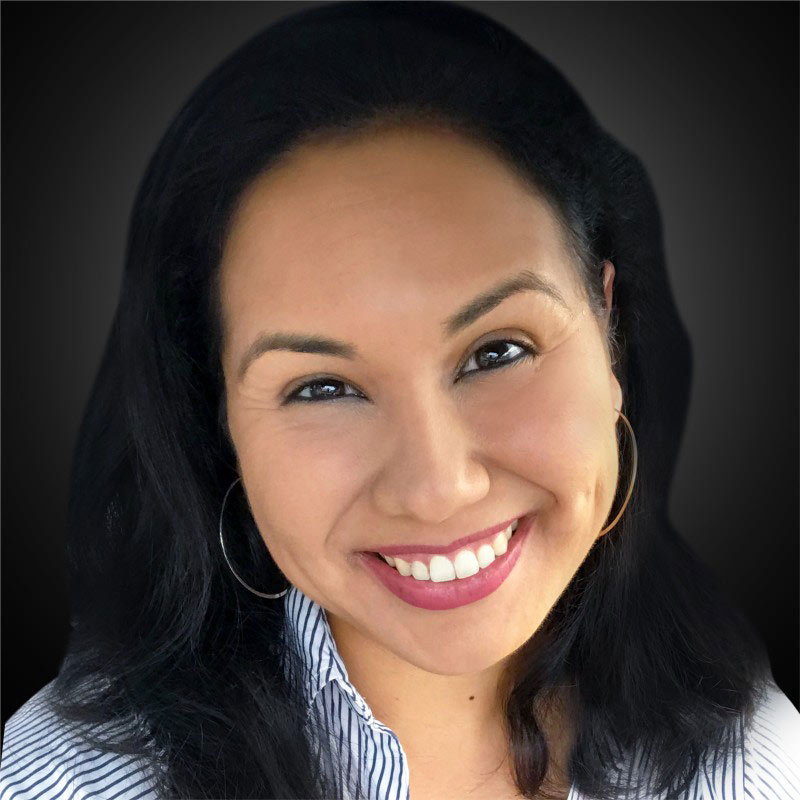
Melissa E. Muñoz, Ph.D. (She/Her/Hers) is a California licensed psychologist with over 10 years of experience working with multiculturally diverse clients. She has worked in a multitude of mental health settings and currently serves as a Staff Psychologist as a part of the VA San Diego Healthcare System and is adjunct faculty in the Department of Psychiatry at the University of California, San Diego.
She has trained and supervised master’s, doctoral, and post-doctoral trainees during her time as a Staff Psychologist utilizing third wave therapy models. She also has a strong teaching experience, research publications, and therapeutic skillsets with an emphasis in social justice, multiculturalism, and cultural consciousness in the therapeutic setting with diverse communities.