- Jan 29, 2025
Overcoming Racial Biases While Prepping For The EPPP With Dr. Tanya Erazo
- Dr. Cheli López
- Podcast
- 0 comments
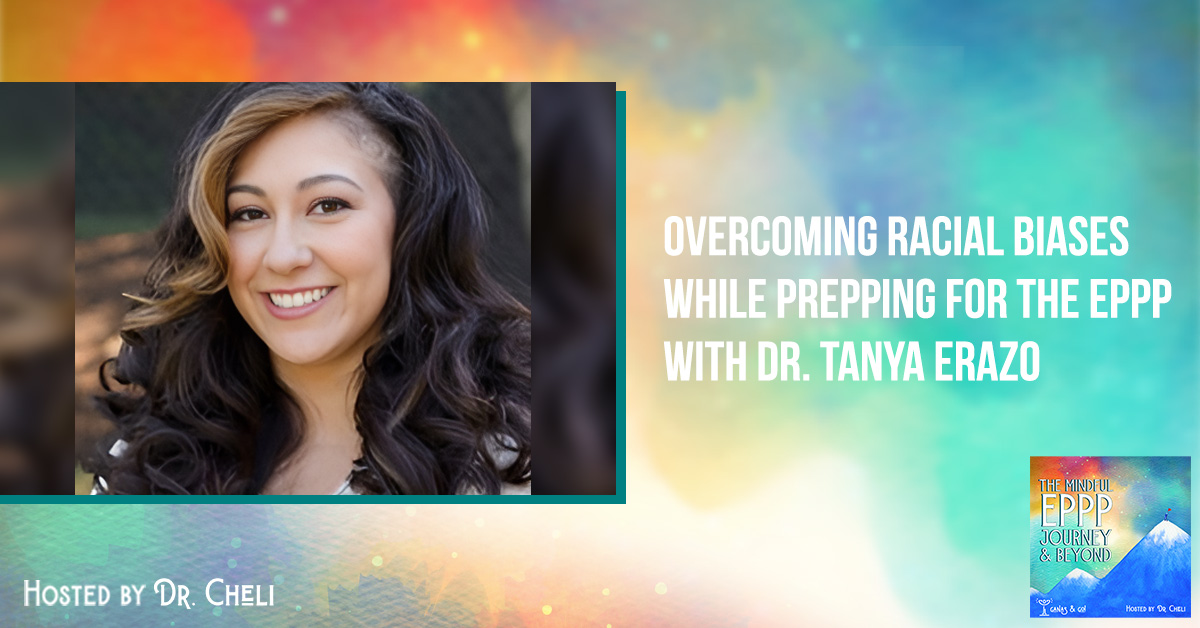
The BIPOC community is at a disadvantage when it comes to standardized testing. How? The systemic issues of racial biases permeate in the way these tests are created. So, how do you prepare for this? Dr. Tanya Erazo is here to help guide you. Dr. Tanya is a Latina born to immigrant parents and understood the importance of education early on. As a woman of color, there were certain internalized expectations she had to deal with as she pursued higher education to become a psychologist and, ultimately, in taking the EPPP. She shares her story as she chats with host Dr. Cheli López on the struggles of students of color or other marginalized groups. She also speaks on the immigrant weight and the pressures of representing your race. Listen in to get tips on how to prep and amend your studying to your learning style and pass on your first take. Stay tuned!
Listen to the podcast here
Watch the episode here
https://youtu.be/Th1Q33InzMY?feature=shared
Overcoming Racial Biases While Prepping For The EPPP With Dr. Tanya Erazo
Welcome, Dr. Tanya Erazo, for joining me on an episode of the show. This is a show about the examination for licensure as a psychologist. This is a show that came from a place of discovering that a lot of people don't pass on their first attempt or a lot of people have difficulty with the exam. It's not something that's talked about in our clinical training so what I wanted to do is bring voices to life in the Facebook groups and interact. When I heard your story, I was like, “I hope that she’s willing to share.” Thank you also for volunteering your time to share with us. I know that you've got a lot of things going on.
This is a show where we explore the ganas behind becoming a licensed psychologist. In Spanish, ganas, the English equivalent would be grit. It’s this essence of resilience, persistence, tenacity, not giving up in the face of adversity and you're working towards that goal. You're a great example of that. I’m with Ganas & Go! which is a behavioral coaching and consulting business that I have. Dr. Tanya, if you wouldn't mind introducing yourself.
First off, thank you so much for having me here. What you're doing is so important and as you said, it’s not talked about, the EPPP and the struggles that many people go through. In my experience, what I've seen is many students of color or other marginalized groups, like low SES or whatever it is.
Tell us a little bit about yourself. What I'm interested for you to share is a little bit about your education and training, why you became a psychologist and anything related to diversity. We use the addressing model as a little framework and anything about your doctoral experience that you think impacted your EPPP experience.
I grew up in the US but my parents are both immigrants. My mom's from Mexico. My dad was from El Salvador. I'll be honest, I grew up in a mixed privileged home. My dad had a college degree from El Salvador and a teaching credential. He was focused on education. My mom was incredibly focused on education too but didn't have a well-educated background. She came to the US to work and move her family forward. I grew up in a time when my parents were doing more financially well and were more financially secure. That wasn't always the case but the way that this influenced me was that my parents worked hard to invest in my education, which gave me such a leg up down the road.
I say that with the caveat that it's not that my parents were superstars. There's privilege involved in that. My dad came with a college degree. He knew how important education could be and also, “We're Latino. We're Mestizo.” I have an indigenous background but we're palatable to Whites. There is some colorism there where I was going to White schools. Often, I’m one of the few Latinas and sometimes one of the few kids of immigrants.
The way I look at it is that I was presented with White privilege and I was like, “I deserve that too.” I would see how different family members who didn't have the types of privileges I had, what their trajectory was. I was like, “This is fucked up,” but we’re going to different schools and that's funneling our different trajectories here.
Education was always pushed on me. I will say that I'm privileged in the sense of I don't have learning disabilities but I do see how racism has touched me with standardized testing. Even though I was often told, which I don't know if it's good or not, like, “You're so smart. You could be a leader for your community.” “I couldn't be a leader for anybody.”
My SAT scores were always mediocre but I performed super well in school like honor roll and extra-curricular. I'm always told that I was a good critical thinker and I could analyze things well but this was never reflected in tests like standardized scores. Growing up, I didn't even know what the hell a psychologist was. I was told by my parents, the child of the immigrant option you're given is you're going to be a doctor or a lawyer because those are the things that you will make money for. That was difficult too because I spent a lot of time between undergrad and graduate school where I wasn't fulfilling that.
I was waiting tables and trying to figure out my life. I had thought about becoming an attorney. When I started taking the LSAT, I wasn't doing that hot. I saw the potential colleagues I had and I was like, “I don't know if I like this environment.” I also started seeing the money aspect. I was like, “This costs a lot of fucking money.” The job I wanted to have was as a public defender. I was like, “I will always be in debt. I will never pay these loans off.” I switched trajectories thinking like, “I want to get to Black and Brown kids that look like me before they're at the point in their lives where they need an attorney that cares.”
I got a job as a social work assistant. I’m basically doing social work under the license of a social worker. I was working with kids and families at risk of psychiatric hospitalization. I was disgusted with how poorly conceptualized they were by their psychiatrist and teachers even. There was never a thought like, “Maybe we can provide an intervention.” It was like, “This child is scary. We need to send them to psych ER because we can't handle them in school.”
I saw that there's gatekeeping and diagnosis. I was like, “Let me interrupt that. I’ve got to be that gatekeeper so I can conceptualize and not over-pathologize and provide interventions as opposed to hospital stays. The trajectory I had toward psychology was very different. It always started with a social justice lens, which maybe you agree with and I'm not trying to put you on the spot.
In my program, it was said that that was the focus but it was not. There were many people along the way, not just in my program but at conferences, co-workers, co-interns or whatever that I would meet. I was like, “This is disgusting how people view people like me.” Part of my background informs the things I care about as a psychologist and why I wanted to further get my degree.
Getting an undergrad degree is a huge accomplishment but I also was like, “I feel like there's not much I can do with what I want to do, which is interrupting oppressive systems on my own. I don't know how to do this.” When I saw what a psychologist was and there was a lot of flexibility there like research, treatment, assessment, consulting and teaching, I was like, “This feels like something I could do and I want to do.”
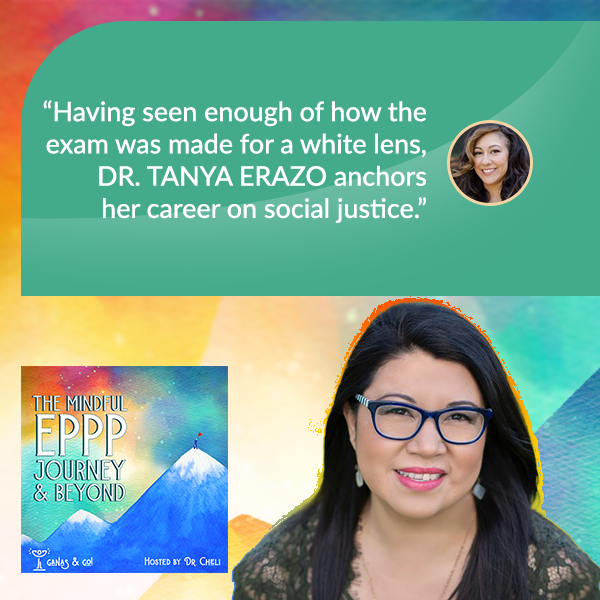
My program was pretty good at preparing for the actual test, which we can talk about. I won't say that every class was around how is the EPPP but a few were. I appreciate the platform you're giving people because we don't talk about this and it's expected that when you finish your doctorate, you go pass the EPPP and then you get licensed. I've seen enough in taking the exam where I'm like, “This was made for a White lens.” Some of the ways that the questions are set up about race and diversity, I was like, “I know in the real world this is not how this works but I know based on the research that you think works, you want to answer it this way.”

Racial Biases: You see enough in taking the exam that this was definitely made for a white lens.
There's so much here because we met but I totally relate to your experience as an undergrad. The reason why I decided to pursue a psychology career was because I took a class on health and learned about the health disparities, access to mental health and what puts us at risk. It's not that there are cultural elements but there are also institutional things. That social justice advocate ignited in me. I was told, “You have to leave California. Go to this program. Accrue the debt because you'll get it back.” That's not the case anymore. It wasn't in the brochure, “This is the path to follow. These are some things to prepare.”
When you're at the end of the degree, it's hard to finish. One, why don't we have enough providers like BIPOC and/or bilingual-bicultural providers is because we're stuck in the educational pipeline. We're not either graduating. If we get to graduate then we're stuck in the licensing pipeline. I've met way too many people. To what you were saying is I ran across this article called the Mental Divide and how this exam and the licensing process are causing adverse impacts on clinicians of color. When I read these stories, I was like, “What?” It's not just me because when you don't know, you internalize and you think there's something wrong with you and the Imposter syndrome, “How did I get a Doctorate degree and I can't pass this exam?”
A lot of people have that mindset not knowing that this is more common but it's stigmatized. You don't share that you didn't pass on your first try because nobody shares and that's not okay. I'm happy to share your story as well because you did pass on the first attempt. It is possible to do it because the other question is, how is it that other BIPOCs are able to pass? I love that you knew what was up ahead. The next set of questions is, what was your journey? Tell us about the logistics. You're a first-timer so it is possible. Congratulations. You also have a different path than people typically do and you took the exam before accruing your post-doc hours. I'd love for you to share a little bit about your EPPP logistics journey.
I'm here to say passing on your first time is totally possible. Also, passing without spending money besides the testing price is possible. Something that can happen, which is important to vet your mentors is that men aren't always working with your best interest in mind. Sometimes they can give you advice on the biases they think about you or based on what they did and think that that's what you should do. I was told a few times, usually by White providers or colleagues, like, “Why are you going to take the EPPP now? I can't believe you would do that. Why don't you wait until the end of your postdoc year like most people do?”

Racial Biases: Vet your mentors. Mentors aren’t always working with your best interest in mind and they can give you advices based on the biases they think about you or based on what they did and think that that’s what you should do.
For me, I knew that this test was going to be difficult because I'm not a good standardized test-taker. Also, I had finished my coursework fairly early in my doctoral journey because I came in with a Master's so I could transfer courses. When we talk about ganas, I had that shit. I took the maximum amount of courses possible. I was the only Latina in my cohort and in my time there that probably identified as Latina. I felt tremendous pressure that I'm like, “I cannot be last in anything because these people will make it about my race.” That's not a great mindset.
That speaks to the immigrant weight especially if you're first-gen, if you're the oldest. If you're the first to do anything, you carry that because it's like you're representing your people in a way.
Quite frankly, I hate that it is something that I had to internalize. I shouldn't say had to. I chose to internalize that at some point because I was like, “I know what this will be like. I went to schools with mostly White people. If I fuck up in anything, they will never forget that.” I’m always questioning why I'm here when in reality, I'm like, “I got in despite my race, not because of my race.” You got in with your race but I had to overcome a lot and show that I'm excellent to get here. I finished my classes early. I was like, “This brain is not going to stay sharp for studying.” The more I'm working, the more I'm farther away from my dissertation and my brain is going to want to go play.
I started my postdoctoral position. I knew that we were going to ramp up our hours to a full caseload for clinical work. I was like, “Let me start studying now and get this test done before I'm at a full clinical caseload.” Mind you, this is the pandemic. There were a lot of lucky things that happened to me, which was like, my testing site never closed. They never canceled any of my appointments. I had heard that these things happened but I was naive even to know that they were happening during the time I was signing up. I didn't have much guidance on the test or the process.
What I did was when I was an intern on my pre-doctoral intern site, I made friends with some of the postdocs. When they were done with the EPPP, they were like, “Take all these free materials from me. I never want to see them again.” There was an overlap where the postdocs were leaving right after I got there. That's what it was. I got all these free materials like stacks, visual aids that people had made of different subjects with different themes and diagrams. That was helpful for me as a visual learner. Someone gave me all their used AATBS, all these blue books that had good summaries of all the topic criteria and content stuff.
Another friend from my program had sent me practice exams that were on Word document with another Word document with all the explanations for them. I started asking people. I was like, “I know other people have done this. Let me use community knowledge.” I would send emails to trusted friends that I knew had passed. I was like, “Do you have any of your study materials?” They would send them to me. It never hurts to offer like, “Let me buy you coffee. Let me buy you dinner.” Usually, people don’t accept it. They're like, “Get this off my computer table.”
They're so done. I have my books here. I made sure that they were visually pleasing because that's what helps me but once I'm done, I'm like, “Take them.”
People were happy to offload all this stuff on me. There is a community of like, “Go, get them. You can do it.” I accepted all of that. When I ended up passing all the in-between I made sure that I gave it to another BIPOC psychologist in training. I was like, “This is important for me to push our people through the pipeline.” I asked her when she was done with them to do the same. I was like, “Please pay it forward and give it to someone for free.” The materials were not super new but they served me well for the exam. What I did was put scheduled blocks of time into my day. On literally Saturdays all day, I was taking a practice exam and then reviewing every single question.
It would take about eight hours. On Mondays, I would do 2 to 3-hour chunks and do some work in between. I had more heavy clinical time Tuesdays through Friday afternoons. My Friday evenings were all my catch-up admin work stuff but also like, “Let me study. This time is for review.” In those study block times that weren't the test day, my test day on Saturdays, I was reading. I made a schedule like, “This week, I'll learn this topic and content area. Next week I'll learn the next one or read as much as I can. The third week I'll review those.” I followed the breakdown of what the majority of questions were going to focus on.
You used AATBS, it sounds like. You use their plan of what they said, “This is the plan you should follow,” or did you modify it?
I followed it loosely and then I was like, “This is also too much fucking reading for me. I’m not even ingesting this anymore.” I would follow the content areas and read for sure. I studied for probably two and a half months. Halfway through, I was like, “I'm behind on this timeline. I'm also tired of reading. This isn't fun or interesting.” What I started doing was finding stuff online, literally going onto YouTube and being like, “EPPP exam.” People would have free content up there. Sometimes it wasn't even related to the EPPP. I would be like, “What's the difference between classical conditioning and operant conditioning? This always gets me fucked up.”
I would watch those videos. You'd be surprised how many mediocre professors think that they should have a YouTube channel but the content is there. It may not be the most thrilling thing but it's free and it's there. It was helpful for me to be like, “I can read but also when I'm tired, I can still study. I can watch these YouTube videos and still feel like I'm learning.”
One thing I'll add is I've done the same because there's EPPP burnout, studying burnout. You reach a point where, at least from what my experience and I've heard people have, you're not retaining. It's that fine balance between studying but also relaxing and nourishing yourself. We always have that guilt like, “I should be studying.” What I've done is I went on Netflix, Hulu Plus, Amazon Prime and I looked for either documentaries or movies or things that were loosely related that I didn't feel guilty watching because I was like, “It's related to EPPP. That's okay.” There's a movie called Toc Toc on Netflix. It's basically the translation is OCD. It's super hilarious but it was like, “I'm studying psychopathology right now.” I liked that you looked outside to see how to better understand the material.
Another thing that helps that I forgot to mention is the materials I got were the PsychPrep audio CDs but they were all turned into MP3s that my friend gave me. When I was like, “I'm tired. I don't want to be inside anymore. My back hurts. Put me out of this goddamn misery,” I would put in my headphones, go and walk outside and listen to like the key terms because I'm like, “This is a good review.” I would listen to the key terms. I would pause it sometimes and try and say it before her.
She suggested that you try and see psychology in everything you're doing. You're working on intervention with someone and you're like, “Could this be this? If that is that, what parts of the brain are activated? What's the best intervention for this?” To be honest, I was like, “This is exhausting. I don't want to do that.” All the key terms helped to get some concepts in my brain, even when I wasn't necessarily trying.
Dr. Nichole Vincent says that the PsychPrep audio is the Bomb.com, which I would agree with. It’s helpful. The key terms are helpful as well.
Despite the pandemic, the nightmare election cycle that was happening and studying through all this sometimes laying like a starfish on my bed and being like, “What the fuck am I doing? I'm risking life and limb to take this stupid test that I don't want to take,” but I would remind myself like, “You wear a mask. You're going to be safe. This is something that needs to get done. Try to get it done once and you'll never have to do this again.” I focused on studying and I know that comes from a seat of a men’s privilege.
Try to get it done once and you’ll never have to do this again.
I had a job. My postdoc is only 30 hours at that time because we were ramping up. I also teach and I took that semester off because they pay me du-du money for adjunct pay anyway. I'd rather lose that X amount of money than have to have to pay that again because I have to take the test again. I focused on studying. I set up virtual Zoom co-working dates with other friends, even if they weren't studying for the EPPP. I was like, “This helps my accountability.”
I had a friend that was working on clinical notes that she would always get behind on. I'd be working on EPPP studying. I had another friend that was working on her dissertation and another friend that was an artist and working on her own projects. I would try and get as many people as I could on Zoom so that I'd be like, “I'm miserable working. We can watch each other and hold each other accountable.”
I have to say something about that. I love that idea because I've done that myself. I've been running groups all throughout graduate school especially for the dissertation. The dissertation and studying for the EPPP is such a solitary process. You’re isolated and you have to learn to say no to things that are more fun than that. It's nice when you can build a community and be able to do that.
For me, it's been so much so that I am creating a business or I've created a business out of it. I have that running for those that are interested but creating your own group is also a great idea. I've done that too like working dissertation, I ran a jewelry group once. It's nice to not feel alone in this process and to have somebody that you can see. I know I used to meet in person pre-COVID and then post-COVID, it all transitioned to Zoom.
I leaned into that where I was like, “What have I ever done anything on my own?” even though this is such a Western mindset of like, “Be independent. You have to do it yourself. Pull yourself up from your bootstraps.” You're like, “None of that is true. We all rely on a community in some way or generational wealth or whatever it is that you're pulling yourself up from your bootstraps with.” I leaned into the community. I also reminded myself that COVID is terrible. I'm not saying that anything good is coming of this pandemic. I literally have no other distractions right now. No one's inviting me to go to dinner. No one’s offering to come, hang out and watch movies. I'm not out there in the streets.
This is the safest time for me to be a recluse and study and get this shit done. That was helpful in the sense of there weren't temptations more than I could handle. It's hard to say no and stay in all day studying on a Saturday when there's a birthday party or a family or parent needs something, a partner or whatever. For me, I was like, “The distractions are so minimal here. I can mitigate them by having my accountability partners where I'm like, ‘See you on Monday. We're going to study together.’” The other helpful thing was and this is advice I got from a mentor who was in her own doctoral program but she was a few years ahead.
To be honest, I hated my first year. I was like, “This is not what I thought a doctoral journey would be. I felt we would be doing critical analysis. I thought all these people would be smart. Not everyone's smart. A lot of people are very ignorant.” She reminded me. She's another woman of color. She was like, “Look at this like a study abroad situation. How is this landscape? How is it different from your values?”
I often would almost watch and I'd be like, “People are wild in this program. If I complained like that, I would get punished. If this person aggresses, they're soothed because they're White.” I looked at the EPPP in the same way when it came to their diversity questions where I was like, “I'm an expert in White people and privilege because I've seen it. How do they think people of color are?” I know the answer to the question through their eyes because I know that this is not true. It's an annoying mental hoop that I had to go through.
It's a paradigm shift that you have to do.
I can't remember exactly one question in particular. The content area was diversity. I remember being like, “They want me to say that Asian people act in X way because that's what suits their research that they're testing me on, even though I know there are all these intergroup differences. I'll answer it the way that they want me to.” I remember when I was checking my exam because it was for my studying, checking the answer and being like, “I fucking knew they wanted me to answer it that way,” even though I know that that's not true in the experiences I've had as a practitioner and some of the research I have contributed to but this is the lens they have. Even though diversity was always something I did well in my clinical work, it was something I had to learn with the EPPP because I was like, “This is not what I see in practice.”
This is fascinating because I’m like, “The wheels are turning for me,” because again, I've taken this four times already. Now I have no shame. I'm like, “Whatever. It is what it is.” When I looked at my bar chart scores when you don't pass, they give you a second sheet of paper and it has bars that tell you nothing. It's not like you can build on it. All I know is that my social and cultural domain was lower than these other domains. Even on the practice exams, I score lower on those. I'm like, “What the heck? I am a multicultural soon-to-be psychologist.” I can't call myself that legally.
This is fascinating to me because I feel like when I see a question, I have to do a paradigm shift and then I have to do a paradigm shift in a different direction to get, “What is it that they're asking?” I know the answer. I know what it is and clinical practice. Somebody in one of my study groups said, “I'm a great clinician. I am excellent at what I do. I get that feedback from supervisors and patients but that approach I hadn't considered.” I appreciate that because I'm like, “I know the answer. Why am I getting it wrong?”
They know they're very incubated research answers, which is not the real world. One thing that can help and I didn't do this all the time but I would imagine the person who wrote the question as this blank person wearing glasses. That's usually the person in a class that will be like, “Actually.”
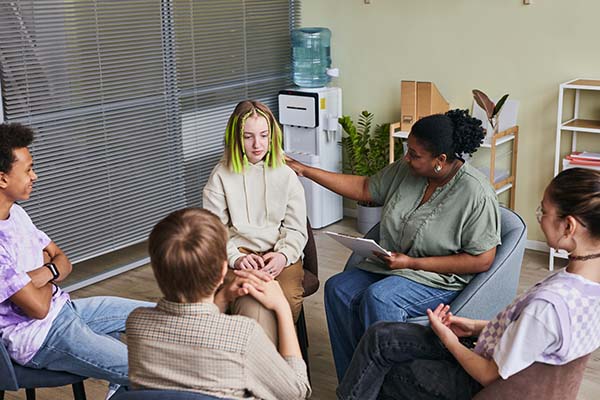
Racial Biases: There is stigma across most cultures with therapy, but when you're living in cities too, there's a difference as well.
No offense to the test writers, if anybody's reading.
It is my caricature of like, “How do I get into this mindset?” If I was supposed to say, “I read in a research paper that all Latinos have a stigma against mental health.” I'd be like, “Tell that to all my Latinx clients in New York City and San Francisco.” I don't know how many times they're like, “My daughter's got to come in here. I want to bring my husband in here. Can you talk to me?”
I do think that there is stigma across most cultures with therapy but when you're living in cities too, which a lot of us do, there's a difference as well. I often thought of like, “Who’s the ‘Well, actually’ here?” “Well, actually in this research article, it says this.” I'm like, “That's the way they want me to answer this and not what I know.”
The materials are there and if you can get your hands on them and amend the studying for your learning style, that’s really helpful.
Thank you so much for sharing that. You talked about cost. You did a lot of things that were free. You talked about studying materials and your process. What are your words of wisdom? You're talking about the framework of how you approached the questions. Is there anything else that you think helped you to pass on your first attempt or even for those of us that haven't passed yet but haven't tried certain things? I'm wondering if you could speak to that.
One thing I continued to remind myself was like, “This will get done, even if it takes me a few times. Even if I don't want to do it anymore, I will make myself get through this.” The second part of that was like, “Why not push hard now to get it done the first time?” I don't think it's about trying hard or being smart or whatever. Those things help but the materials are there. If you can get your hands on them and amend the studying for your learning style, that's helpful because not everyone is, “Read 40, 60 pages of content. Do this summary. Do these exam questions over and over and then you'll be good.” I feel like I'm okay with that kind of learning but I also got tired. I wanted to see some visual study guides.
It was helpful to hear things while I walked around or wash dishes in my house and stuff like that. Trying to amend even these cookie-cutter programs for yourself and with the caveat. That doesn't mean that you do your whole own thing but follow it as best as it makes sense to you and finds people that have passed and talk to them often. This is part of my neuroses where I often was asking my friends, like, “When you took it, were the questions exactly the same as the exam or the practice exams that you were taking? Were they different? How long did it take you?” There's so much shared knowledge that can soothe our own anxiety but also help us prepare for the exam.

Racial Biases: Find people that have passed and talk to them often. There’s so much shared knowledge that can soothe our own anxiety but also help you prepare for the exam.
I was told often by my friends, like, “You will feel like you're failing the entire time. You won't think like, ‘I nailed it.’ That's the right response and I'm going to pass this exam. You'll be second-guessing things. You'll use up the entire time of the test,” which was true for me. I was finishing my practice exams in two and a half hours but then I took the full four hours and whatever it is for the exam because I slowed down and I was like, “This is game day.” I'm not trying to zoom through the test because I hate it, which is what I was doing during my studies. I'm reading because I know that the way my brain works is I'll read a sentence and I’ll be like, “I got it,” and answer based on that. I'm like, “Shit. If I had stopped and re-read or read slowly, I would have caught what they were asking instead of what I inferred.”
Shared knowledge is so important. Taking the time when you take the exam and reminding yourself that you will get through this because at a certain point, it becomes about ganas. Even if it doesn't feel great for everybody, even if the test has these poor pass rates for BIPOC, where there's a will, there's a way. I know that that sounds very privileged. I welcome the challenge on that. I don't think this is the only way but I do feel at a certain point you will get through the test if you keep trying although it's unfortunate that it's so expensive.
You will get through the test if you keep trying.
That was a big push for me where I was like, “I'm willing to give up any fun time in these two and a half months because I cannot pay this money again. I refuse to. This is an oppressive capitalist system that we're part of that we're getting charged to take a licensing exam that no one wants to take. Most people don't feel like it’s applicable in the real world but here we are. Let me only give them my money once.”
I wish I could say that. There are a few thoughts. It's like, “This is so good.” One, before I forget and this is a question that a lot of people typically have is, how did you know you were ready? What were your scores before you tested? Before we go there, Dr. Vincent is saying, “Agreed 100%. If you're not continuously willing to give it your all and you will make it.” We interviewed her. She wishes she had only given them her money once also. She passed on the eighth attempt. She shared her story in a previous episode. There was a post she did in her group that talked about feeling confident and how you often hear in these Facebook groups like, “I felt confident going in or whatnot.”
I made the comment that “Is it just me?” I believe it seems like what I read is that people are passing think that they're failing the whole time. A few people commented on the same post saying that they felt confident but they actually did worse. For me, I'm like, “#IllusoryCorrelation.” That's in social psych. I felt confident the 3rd and the 4th time, I was like, “I got this.” I thought I had the chance of passing but it also sounds like a lot of people that are passing the whole time that they're taking it, they believe they're failing. What they're doing is managing their anxiety to be able to keep moving forward with the expectation like, “I probably failed it,” especially if they've taken it before. I wonder, what was your experience in that or your comment on that perspective?
That's such a good question because I don't think that's something we often talk about. When I was going into it, when I was studying, I was like, “I'm going to fucking fail this thing.” I'm not getting the scores that I should. I was failing all until the last practice exams I was taking but that's why it was so helpful for me to talk to other people who had passed. They're like, “Me too. If you're not failing something's wrong or you're cheating. I was able to feel confident that I would pass on game day because everyone else was having a similar experience that did pass. I have my scores here. I would keep a list because I'm a psycho like that. In my first exam, I got a 46%. The last exam that I took was fresh, I hadn't seen it before, I got 58.5%.
I started taking a different set of tests that my friend told me were easier. She told me and another Latina, she was like, “It's important for your confidence to take the easier test so that you feel like you have a higher score because it’s more likely what you'll see on the exam.” When I took that test, the highest I got was 71.5%. I was like, “I'm feeling okay.” I took two more tests but I retook exams I had already taken because I was like, “At this point, I want to see how I do with the material I've already seen.”
The highest score I got was 77.5%. Yes, that's passing but it also doesn't feel great. You're not like, “I got 100%. I'm going to nail this thing.” When I went into the exam, I reminded myself like, “Those scores from before, most people are failing and they end up passing. They feel like they're failing the entire time. Don't worry. All I need to do is take my time, read these questions so that I'm responding to the correct question. Not the one I'm inferring.”
All you need to do is take your time, read these questions so that you’re responding to the correct question not the one you’re inferring.
Inferring versus creating a story but it’s about what are they asking.
Maybe I'm alone in this. I don't think it's because I'm so smart and I studied so much for the EPPP. I didn't feel like I was failing the entire time. I did feel like, “I don't know if this is the right answer but I'm probably on the right track.” What I noticed in the exam for me and I'm not giving away any exam secrets or anything but I was like, “I see what they're doing here. All those tests that I took were rote memorization like, ‘What is Trenton neurotransmitter associated with? What are these clinical consolations indicative of? What ethical thing would you do? What ethics tenant are we looking at and testing you on?’”
In the exam, I felt like they wanted me to hold all this information and manipulate it. I can't remember how many times it was like, “What's this definition? What is this neurotransmitter doing?” I felt like it was more applied. I feel like I do way better on those tests. There was some confidence there. I'm like, “Dear God, thank you. This isn't like one of those logic games that I had to do on the LSAT or whatever,” even though I'm like, “I know I'm smart. I know I’m a critical thinker but these standardized tests tell me I'm not. This felt like I can manage this. We got this. Keep reading slowly and answering how you know. They're going to try and trap you. Don't let them trap you.” I took every single minute possible. I finished the exam early but then I had flagged 60 questions that I was going to go back and check. I didn't even get through all the questions I had flagged when it closed out on me.
You answered and flagged them and moved on. Did you take any breaks? People often ask me that question.
I took this to the heart of the pandemic. It was right as flu season was ramping up in California. I was like, “I need to take this once because I’m not risking my life more than once for this fucking test.” I went in there with a mask, my glasses, which I don't know if this helps people know or not but they had me take my glasses off to make sure there weren't cameras in there, which in my head, I was like, “Shit.” I was freaking out about that. I put them back on my face and I was like, “What if there are germs on here?” There was someone behind me coming back from a break while I was checking in that had his mask down here. I was like, “This is why I don't want to be taking this right now. I don't trust people with rules. No one's calling this guy out.”
There was a different level of anxiety. Not only the anxiety about the exam and the outcome but this other anxiety about health and safety amid COVID and people not following directions.
The woman was very good at putting me a seat away from people. I had my own little space and I clued into being like, “This is game day.” I used to play a lot of sports growing up and through college and stuff. I got into that sports mode where I was like, “This is your house. They're not going to fuck with you. You studied hard. You're not going to give them another penny. This is it. We're going. You're going to slow the fuck down.” I know that for me, I'm like, “Let's go.” I'm like, “No, we're going to slow down.” I was reading the prep books that you should use the five-minute tutorial or whatever.
I used the five-minute tutorial and then I made myself slow down and read. I felt like when I was taking the test, I wasn't feeling super confident but also wasn't feeling like I'm failing. If I didn't know that everyone else I knew had used up the entire time, I would have felt like I failed completely. When I was looking at the clock, I was like, “I'm okay. I'm doing okay. This is normal.” I had a friend tell me before. She was like, “You'll know you failed if they give you two sheets of paper. If you get one sheet of paper, you're good. It doesn't matter what your score is.”
I love that you said the sports analogy because after the 3rd time, going into the 4th, I was looking at sports. I'm not a sports person at all. The only time I watch any sports is the Olympics and the World Cup. I remembered that there was a moment when I was working on my dissertation, that it was the Olympics. I was back in Texas at that time. I'm from California. I was struggling. That's a whole other experience but I remember watching the Olympics. There was a runner I believe. I’m watching the Olympians in general.
It's like they dedicate their lives, discipline, mindset and everything that they give up to for an event that is seconds or a minute. I was thrown by that. I was like, “That's like the dissertation. You spend all this time, all of these years for a two-hour block to defend your dissertation.” I was looking, “What's a sport that you're like, ‘What the fuck? How do you even do that?’” I saw pole-vaulting. You look up and you're like, “How the F does somebody jump over that?”
I was like, “That's the EPPP. You’re pole-vaulting over a 500 score with the 800 mindset,” because it's not about, “I can get this question wrong. This one doesn't matter.” It's about, “How I can get every point?” I love that you're saying that your score doesn't matter. All that matters is that you jump over the 500. Would you be willing to share your score with us or not? That’s okay.
I don't remember what it was. I know that the scaled score was 80. I remember thinking, “If I want to get licensed in New York and California, the scale score from New York was 75, I believe. I didn't know what the hell that translated to in numerical. I believe I was 500 something. I can't even remember now. I don't remember the numbers but I do remember looking at the score and being like, “80? I can do it in New York too.” My program was in New York. I'm from California but I'd like to have my options open.
The scaled score was that. One thing that I would be remiss if I didn't say is please celebrate afterwards no matter what. Even if you didn’t get it, even if you did get it, you worked hard. Granted I passed mine with COVID and stuff but I still was like, “I'm going to go to this bakery that I love that I haven't gone to the whole pandemic because I'm neurotic like that and scared of everything but I'm already exposed potentially so I'm going to go. I'm going to get some of the food that I love there. I'm going to take it home. I'm going to chill the fuck out and not feel like, ‘I should be seating. I should be doing this.’ I'm going to sit with this food I love and I'm going to relax. It probably won't even hit me that I've passed.” It didn't until the next Saturday when I was like, “I have a Saturday back.” I encourage people to celebrate or at least like take some time to grieve it, mourn it, celebrate it or whatever.
Celebrate afterwards no matter what. Even if you didn’t get it, you worked really hard.
I love that you mentioned that because I learned that lesson after the dissertation. I've had discussions where I didn't even want to walk because I was so over it. When my mom and I got into this tiff because she wanted to buy a frame and I was like, “F the frame. I don't ever want to do anything with that.” It took a while and then I realized it wasn't about me. It was about her. Her sacrifice and all that. I learned to celebrate even “failure” because it's not failure. It's only when you stop. It's a lesson learned. To celebrate every achievement because we're such type As, we’re such high achievers.
We strive to be the best and we do great work that as soon as one thing ends, we're moving on to the next thing because we're also juggling a lot of things. It's that moment of mindfulness, which is why I integrate mindfulness into this process is celebrate those achievements whether they get you the results or not that you want. I'm glad that you mentioned that. Any other words of wisdom in terms of what you did or what you found helpful?
I'm not sure if it's necessarily a word of wisdom but one thing as a woman of color taking the test, I was worried that I would have to tell people that I didn't pass. People would ask because genuinely people will be curious. They want to know like, “How did you do?” I remember when I was starting to tell people at postdoc, I was like, “I shouldn't have told people because if I don't pass, they’ll ask.”
Halfway through all that thinking and studying about it, I was like, “Who cares? If I don't pass, it's not me. I'm not stupid. I know that there's data that suggests that there is an adverse impact with this test and scores and licensure process for BIPOC. Also, not just BIPOC. It’s people that come from multiple marginalized communities. I had to remember that the system wants to blame someone except themselves.
We do a pretty good job of blaming ourselves for a lot of stuff. I need to be rational about this. Maybe I could blame myself if I wasn't studying the way I was studying or if I was not giving a shit and not putting the work in but I had put in the work. If I did pass, it wasn't just on me. That was helpful to remind myself before I went into where I was like, “Pasa lo que pasa, I'm still smart. I still got a Doctorate. I'm not that bad in life and I will finish at some point.”
I love that because we don't hear those stories. There is that fear. Especially the more that you take it is you get to a point where you don't even want to share with people because of that shame of like, “I didn't pass. What does that mean?” You're dealing with other people's expectations, which is the hard part. It's like, “I can deal with my own but now I have to deal with other people's expectations.”
I'm glad that you got to celebrate. You mentioned adverse impacts. I have the CBT model about how thoughts are connected to emotions or feelings behaviors and physical sensations. I have a lotus flower in the middle representing mindfulness. If you could share with us a bit, looking back, what was your overall experience? Did you face any adverse impact? If you didn't, it sounds like you did things to mitigate that impact.
In the beginning, I started with a tremendous amount of anxiety because I was like, “Just looking at the study materials is daunting.”
Especially the AATBS books.
The friend who had given them to me, she had read every single thing. She gave me multiple stacks of flashcards that she had made. I remembered looking at those being profoundly happy that she had given them to me but also being like, “Holy shit, she had to do all this?” and feeling like, “There's no way I'm going to read all this.” There was also a binder that I received that I never even looked at, to be honest because I was like, “This is enough material.”
I was anxious that I was like, “I'm never going to be able to do all this. This is insane.” The friends that I knew that had passed all spent 3 to 4 months studying. The only time that was available before flu season kicked off was the Saturday after Thanksgiving. It took me two and a half months from the date that I sent the payment. I was like, “I have less time than everyone that passed. Am I going to get COVID because I'm with people in the room?” Let's be honest, not everyone's great with masks and distancing. You're walking into a room with strangers and hoping that they've been behaving so that you guys can all take your respect for tests.
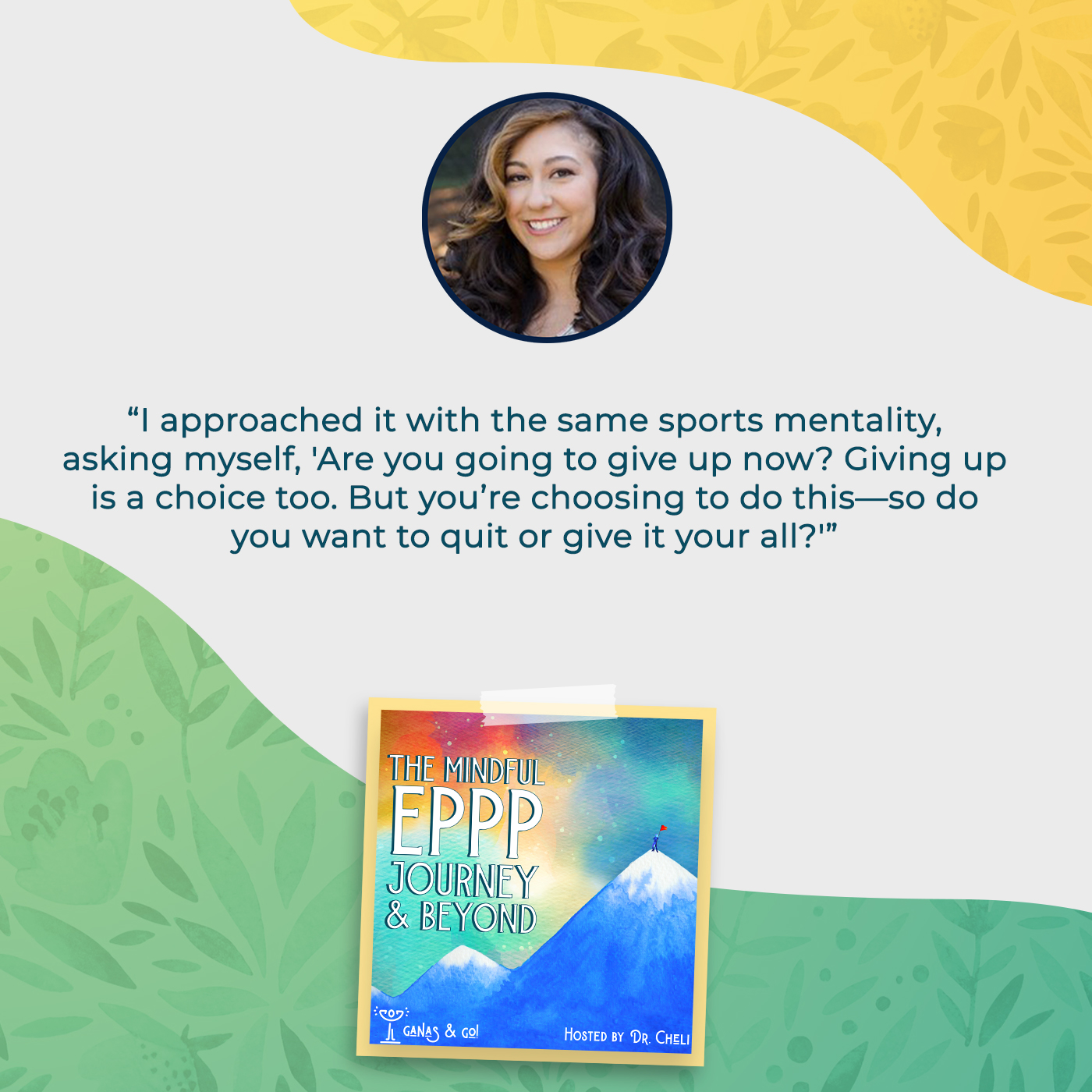
I had a lot of anxiety. For a while, I had a gut feeling that I was like, “I'm not going to pass. Based on what people have told me when they pass, I'm not going to be spending as much time.” What I did was I was the same sports mentality where I was like, “Are you going to give up now? You can give up. This is also a choice.” You’re choosing to do this. Do you want to give up now or do you want to try hard, increase some of your study hours and get the shit done before Corona gets worse?”
I try to kick it into gear and that worked for two weeks and then I was like, “I'm tired. I don't want to do this.” My study block times would get loose and I'd be like, “I'm going to watch this show and then I'll go study after.” Coach Tanya had to come in again and be like, “What are you doing?” I was like, “You cannot in good conscious say that you studied hard if you're sitting here and watching another episode of some bullshit you've already seen. How do we get you hitting the books?” I was like, “I got to get my accountability partners.” I had to take an outside perspective a lot for myself and use coaching strategies like, “There's a behavioral issue here.” I don't even think it was necessarily thoughts behind it. It wasn't like, “I'm anxious. I don't think I'm going to study. What's the point of studying?” I was like, “I'm tired. I don't want to do this. It’s boring.”
I have a friend that called it her two-year-old tantrum. “I don't want to do it. I want to go play.”
I had to do not even cognitive restructuring but behavioral interventions where I'm like, “It's hard for you to do it alone. I get it. We got to match this behavior with someone else so that if we tie it to friend time on Zoom, you guys can co-work and get your work done respectively.” I often reminded myself that I had a goal in mind and that I needed to hit this goal because I chose to. Even if I was having my tantrums about it or my disinterest, I was like, “You chose this. You have to do it.” A lot of it, to be honest, was money. I was like, “Girl, you spend $700. You have to study right now. Do you want to pay another $700 to do this shit again and study longer?”
A lot of it was behavioral interventions and reminding myself that this had been a conscious choice and that yes, I did think about the abysmal rates of the discrepancy and passing rates for different demographics but I was like, “You've gotten this far. Keep pushing. If that happens, we'll work on that later. Keep working now. You can go try and fight or voice your disagreement with the test later but right now, you're not going to get caught up in how unfair this test is.”
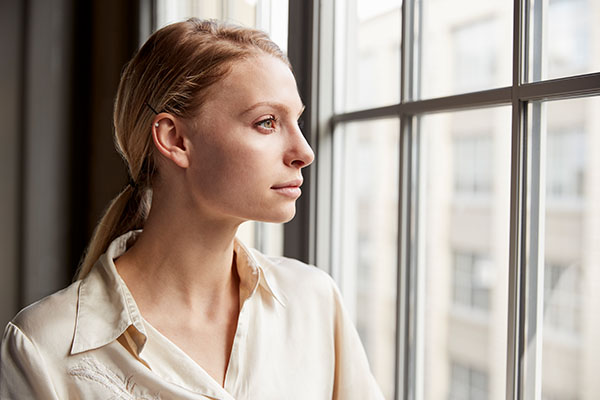
Racial Biases: A lot of it was just behavioral interventions and reminding myself, like this had been a conscious choice.
I have been caught up in that. It does not help. That's great that you coach yourself. Eventually, that's what I ended up doing and channeling all those emotions in a different way like building this show. That's great that you had that awareness and you were pushing yourself in that way. A lot of people struggle with that. Even though we are clinicians and we are the experts in behavior change, it's hard when you're the client.
Treat yourself that way. I don't tell my clients to go fix all their things. I'm like, “How can we pair this with something? Who in your corner can help you with this?” That's what I applied to myself where I was like, “How do we pair this behavior so that it starts becoming more habitual? Which friend is the most motivational that you'll need on the long days?” Be mindful of how you best work and how you can set up your resources to push you through to the finish line.
Is there anything else that you'd like to share with us about your journey and the process?
I had often heard one thing that other people remarked to me about the EPPP was, “I've never heard of anyone that didn't study seriously and not pass.” That was something I heard but I had only heard it from White classmates or a White professor. That thought haunted me a lot because I was like, “If I don't pass, they're going to think it's my fault. I want to iterate that it's not a personal problem. This is a systemic problem. One of the reasons I was able to pass on my first time was because I knew that this was an issue and I was like, “Let me try and make this as possible as I can for myself. I got the free resources. I paired that with multiple people that I was working with throughout the week. I constantly reminded myself that it was a possibility that I could fail but that it also was a possibility that I could pass. If I didn't, it didn't mean I was deficient.”
Let's be honest, it does personally feel that way. Logically, we can think that. I was like, “It will be hard but it's also not just us. There's a lot going on that does not prepare us well for these exams.” I mentioned before, my program had talked a little bit about EPPP preparation. It was never like, “This is what the exam looks like. This is what you'll see.” I had 1 or 2 professors that were fresh hires, newly-minted PhDs.

Racial Biases: You can go try and fight or voice your dislike and disagreement with the test later. But right now you're not going to get caught up in how unfair this test is.
They were like, “This will prepare you for the EPPP. For this exam, I try to make it as similar as I could. You can hold onto this. This can be a resource for you.” I'll be honest, I didn't use those but knowing that this was a conversation that was being had in my program of like, “You will also have to prepare for the EPPP. Certain subject matter like this will be on it.” That was helpful too and I don't think most programs do that or won't. I don't know if that's the case.
From the conversations I've had, it doesn't seem to be the case. I know for me, it wasn't the case. The focus was, “Let's get you to internship. Let's get you to match.” Matching was always the goal. After that, it's like, “You're on your own. Go figure it out.” Programs need to prepare us better for this. When you go into something, you focus on the immediate goal that I personally didn't think or didn't know that I should have thought about. What is the full process? It’s one of those, “It's licensure. I'll pass it. Everybody else around me is passing.” I didn't know that there were differences in passing.
It isn't just about race and ethnicity. Socioeconomic status is a big variable there because I see non-BIPOC people not passing as well. The researcher in me is like, “What's going on here? What's the answer?” To the point that they're doing a second exam, which would create an even greater inequity for many of us. It’s like, “That puts into question the validity of this exam,” but that's a whole other conversation. That's great that you got the heads up. When we have the heads up, we're able to plan accordingly.
To be honest, part of it is I was accepted into a fully-funded program. They looked at us as like, “We're investing in you so you need to perform. Performance means you will graduate on time. You won't fuck up our testing. You're not going to mess up our numbers.” It was never said to us like that but the preparation was such that they were like, “We can't fuck up our numbers.” We had stuff. Before going on internship, there was a seminar on how to apply. In classes, it was like, “This is what this will look like for a licensure exam. This is what this will look like if you ever become an expert witness. This is how you testify in court.”
There was a lot of focus on the investment they were making in us. Friends I know that have gone to PsyD programs where it's more you pay for the tuition. My understanding and I'm not saying this is across the board is that they're getting their money regardless. If their test rates aren't as great or you don't match to internship as well, they'll work on that. This isn't an investment. You're investing in them. I feel like there was more care about the longevity of my career because they were like, “We're investing several hundreds of thousands of dollars in you through stipend and research money.” They want you to do well so that you can say, “I went to this program and we can claim you.” That is an issue. All programs should be investing in your long-term future.
Racial bias is not a personal problem; it’s a systemic problem.
I'm part of a study group. Dr. Steve Herron runs a study group on Saturdays and he talked about micro-invalidations. It’s very similar to how people of color experience micro-invalidations, which I have heard my fair share of, “You must not have wanted to pass. What's underneath? What's going on?” “I wanted to fork over $4,000.” “You need to study. You need to do the tests. That's how I passed.” It's like, “No, I tried that. That doesn't work for me.” “You're such a great clinician. You should have passed.” “That's great. Thank you. I appreciate that but that doesn't help.”
For anybody who is a supervisor to become aware and mind your language like when people ask you, “When are you done with your dissertation?” I'm like, “Don't ask me that.” There is a lot of micro-invalidation. I agree with Dr. Herron that it's not intended but it does have the potential to cause some harm to the motivation and the emotional experience of this exam. I know personally, I'm working on not getting emotionally attached.
I'm preparing for the next one. I'm saving up for two exams because I'm giving myself permission. I don't want to give them two exam costs but I'm allowing myself permission to let go of the outcome. If it doesn't work then at least I would have learned. When you know what's up ahead, you can best prepare for it. What's next for you? This show is about the beyond. What are you up to now? Where can people find you?
That is a great question because I'm like, “What do I want to do now?” Being in the state of California, I'm sure you know there's a law and ethics exam that I have to pass now but I can't do that until I do finish my post-doctoral hours. I'll be honest. I'm not as afraid of that one. I've heard from various people that in general, it's not as intense, long and costly. Also, I'm like, “It's about the law. If you know the rules, I assume, it can be easier.” You can always be like, “The law said that.”
I'm sure it will be difficult in its ways but I feel like the EPPP is the beast. I'll start preparing for that probably in a few months. After that, I'd like to split my time. Right now, I'm doing more of a clinically-focused postdoctoral position, which I love. I'd like to split my time. In the future, once I'm licensed, I can call my own shots about stuff to split my time at community mental health or a private clinic and then do research and teaching. It's important for people that look like us and not right to see us in positions. It's a wonderful thing to be a therapist. I feel deeply humbled that people trust me to listen to some of the things that are so personal to them but I also think it's important to be out there in a more, I'm not saying public, like I'm trying to be like Oprah.
I never had a Latina psychologist professor until I got to a doctoral program. Even then, I never had her as a professor. She was on faculty and I would talk to her. I've been teaching probably since my third year in my doctoral program. I like it a lot. Every job has some drawbacks. I got an email from a student that was like, “I researched you and saw some of your publications. It's so good to see a Latina doing the talk.” I was like, “Yeah.” I'm all about trying to move up and pull someone with you. That's what I'm looking to do. My hours probably won't be done until September-ish 2021 end of the summer. I have some time to think about what I'd want to do. If anyone wants to hire me, come talk to me.
She's on LinkedIn.
I'd also like to think about doing something international as well. I'm a kid of different cultures. I don't think the US is everything that we're told that it is. If I can figure out a way to teach, even as a visiting professor and live internationally at certain points, I would love that. I love being outside of my comfort zone in different ways and learning more. It can only educate you more.
I already have a colleague for you to connect with. She's a licensed psychologist. She's living out of the country. She's developing her business. It may be something about psychology across borders or something like that.
I’m on Twitter @IAmTanyaErazo. I'm getting my webpage together so that people can find me for my clinical work and also my research pubs. For the most part, I try and be in the community helping people that don't often have access to good quality care. Hopefully, I'll be at a community mental health clinic sometime in the future but I'm not sure realistically if I'd want to do clinical work full-time.
Your commitment definitely shows by you sharing your story with us. I don't know if you remember this but when I was looking up your email to send you for the show, I found that we had engaged some time ago. I was doing a presentation on privilege and race and ethnicity. You sent me some slides. I was like, “I remember her but from where?” When I pulled it up, I was like, “That's what it was.” I thank you from the bottom of my heart for your willingness to share and your stand for the community. I know that you are doing great work. Thank you. Thanks for being our guest.
For those of you reading, I do run a free community on Facebook called The Mindful EPPP Journey. It's a space to talk about the EPPP as a journey whether you're a first-time test taker or a multiple test taker. When I saw this image, it stood out to me because as first-gen, the first mountain was getting a college degree. The second mountain was getting the Doctorate. I thought I was done and now there's this other mountain and yet it is achievable because we have seen repeatedly that people are passing the exam either on their first attempt or multiple attempts.
For those that are interested in an accountability group, I do have a paid membership that people can be a part of. The reason for this was because I found that it was hard for me personally to find a group that was consistent and that once people pass, they move on and then the group disintegrates. I found my calling after this experience. My mission is to get as many people licensed as possible, get them unstuck from this licensing pipeline. If anybody has any questions, you can go to my website. I use the analogy of pole-vaulting over the EPPP. You just need a 500 score to pass. The score does not matter in the end. It's a community about helping each other, which Dr. Erazo talked about as well.
If anybody's interested in reaching out, you can learn more about this at MindfulEPPPJourney.com. I'm also on social media @GanasAndGo. If anybody's on Clubhouse, I'd love to connect with you. It's a great platform. Also, @MindfulEPPPJourney. Echandole ganas. Keep going. Keep that momentum. Don't let yourself be defeated. Take care of yourself, celebrate and this can be done. Thank you again for your participation, for reading and for your engagement. Thank you so much Dr. Erazo for your contribution. I appreciate it.
Thank you for the platform and for having me.
Bye.
Important Links
Dr. Vincent – Dr. Nichole Vincent’s Journey (Past Episode)
@IAmTanyaErazo - Twitter
The Mindful EPPP Journey – Facebook Group
@GanasAndGo - Instagram
Clubhouse – Ganas and Go
@MindfulEPPPJourney – Instagram